Friday, July 20, 2007

T minus five hours—and counting


The highly anticipated, final installment of Harry Potter is very close to its official on-sale date. I'm pretty excited and relieved. For the better part of three months, I have been assiduously avoiding all press releases, websites, blogs, articles, and general speculation about the book. My hope is that I can keep my imagination keen from the very first word, sentence, chapter. And, it hasn't been easy.

An internet retailer messed up their shipping schedule so that customers who pre-ordered the book have already received it. Someone has already photographed each page and posted the photos online, including the conclusion. Some other person has attempted to sell their illegally obtained copy on eBay. In a pretty dumb publicity stunt, a KS95 DJ claimed he would read the final chapter on air, which he did albeit silently. And, Kakutani has already reviewed HP7 for the NYT—bad girl.

Mr. Bibliotonic and I have attended midnight parties for each of the last three books and were set to go to one tonight. However, Mr B. is on vacation. I thought about going with the kids, but I'm very apprehensive about keeping the little Bibliotonics awake long enough to attend a party, then wrangling overtired kids, who are too young to care yet. Instead, my friend Caryl is going to meet me tomorrow morning at The Red Balloon, our local children's bookstore, which is opening its doors at 7:21. I've already pre-purchased my book so really I could pick it up any time, but I'd like to catch a little bit of the buzz.

I. Can't. Wait.

Wednesday, May 30, 2007

May recap

This is my first post for the month of May, which was a somewhat cruel month for reading and writing—just not enough time. It took me nearly a month to complete a 300-page mass market mystery. So I thought I'd touch base here and resolve, again, to get into a better writing groove.

Leading into May, I traveled to New Orleans on the last weekend of April to meet my friend (and former Holtzbrinck co-worker) Krista for Jazz Fest. A few notable items about the trip:


1. reading for hours, uninterrupted by the needs of children, on the plane (Kevin Brockmeier's The Brief History of the Dead, which I highly recommend)

2. listening to hours of incredible music at The Fest—Dr. John, Charmaine Neville (sparkling), Trombone Shorty (brass-tastic), Bonnie Raitt (wailed), Van Morrison (still has it), New Orleans Klezmer All-Stars (had a packed audience doing circle dances), Terence Blanchard, Norah Jones, Irvin Mayfield and the New Orleans Jazz Orchestra, George Thorogood and the Destroyers, to name but a few

3. eating amazing food—pig at Donald Link's Cochon; crayfish boil (crayfish, potatoes, corn, juicy kielbasa-style sausages); raw oysters, crawfish Monica, pheasant-quail-andouille gumbo, and red velvet cake at The Fest; beignets and chicory coffee at Cafe du Monde; softshell crab at Crescent City Brewhouse

4. drinking—hurricanes and hand grenades on Bourbon Street; French 75s at Arnaud's elegant French 75 Bar; sazeracs at Cochon

5. not drinking absinthe (my liver thanks me) at the pirate bar

6. walking, shopping (Hove parfumerie, art galleries on Royal Street, a fantastic cookbook store), touring (the National Park Service ranger station offers an interesting—free—walking tour of the French Quarter)

Since returning from NOLA, I've attempted to prolong the experience. John and I threw a dinner party for some friends and served French 75s, jambalaya, and red velvet cake, among other Southern food items. And, I read the first book in Julie Smith's series set in New Orleans, featuring Skip Langdon, New Orleans Mourning. Vivid descriptions of the French Quarter and Mardi Gras transported me right back to this steamy, exotic city. Depictions of a rigid class structure, a compelling mystery, and a likeable sleuth rounded out the pleasure of this book. Yesterday, I read the first chapter of House of Blues, another book in the series.

Another high point this month was hearing Michael Chabon talk about and read from his latest book, The Yiddish Policemen's Union, as part of MPR's Talking Volumes series. I may write more on this later, but it was a really satisfying evening despite the annoying host/moderator. Chabon is smart and funny, nerdy and sexy—just like Mr. Bibliotonic! He cited Pride and Prejudice as one of his ten favorite books, which just may inspire me to pick it up again soon.

Son Number One and I are working our way through Beverly Cleary's masterpieces, starting with the books featuring Henry Huggins (Henry Huggins, Henry and the Paper Route, Henry and Ribsy). When Simon's teacher heard we were reading Cleary, she let him bring home Ramona the Pest. I knew my love for Mrs. Cochran was boundless! Reading Ramona took me right back to when I read the book, at eight. I remembered Susan's boing-boing curls, Ramona's crazy Qs that had cat's ears and whiskers, and the Dawnzer Song.

Finally, I would be remiss if I didn't mention that one of my Mother's Day gifts from Simon was Animal, Vegetable, Miracle, Barbara Kingsolver's new book. In it, Kingsolver details a year spend growing and raising the food her family ate. Simon could tell by the cover that the book was about food, and he knew I would like it. By golly, I am raising him right!

Wednesday, April 18, 2007

Fieldwork

I’m a sucker for first novels and for novels set in exotic locations. So when I noticed a few people on the book forums talking about Fieldwork, my interest was immediately and irrevocably piqued. What’s not to like about a first novel involving anthropologists, missionaries, demon possession, sexual taboo, and murder, that is also set in deepest, darkest, steamiest Thailand (near the Burma border).*

Mischa’s girlfriend has accepted a job teaching English in Thailand, and our protagonist has followed her there. He spends his days writing men’s fashion and movie reviews for a Thai English-language weekly. One night over dinner, a fellow expat tells Mischa a story about another American expat found dead in prison, an apparent suicide. Compelled by the unforgettable tale, and with nothing taxing his time, Mischa is soon engaged in investigative journalism.

His hope is to learn more about the circumstances under which Martiya van der Leun, an academic anthropologist, came to be imprisoned and dead. Martiya arrived in remote Thailand, straight from Berkeley, to do fieldwork—literally the time anthropologists spend in the field, observing Native groups and gathering research around which the anthropologist may build a career.

By conducting interviews with Martiya’s friends, family, and lovers, Mischa learns more about her life in academia and among the fictitious Dyalo tribe along the Thai-Burmese border. He uncovers more about this isolated tribe, as well as their rice planting ritual, their superstitions, and their sexual taboos. He also spends time with key members of the Walkers, a big missionary family that has been saving souls in Thailand for four generations. It is the Walkers’ prodigal son, David, whom Martiya has killed.

One book reviewer compared Fieldwork to other titles in the “backpacker lit” genre, a label I’ve not heard before now, though I like and understand it intellectually. An example of such is Alex Garland’s The Beach (which, since I’m a fan of time and place—when and where one reads books—I will note was the book I read while in labor with Son Number One) and Katy Gardner’s Losing Jemma, which appears to be out of print. Another reviewer called Fieldwork a “mystery novel with literary leanings” like John Berendt’s Midnight in the Garden of Good and Evil and Caleb Carr’s The Alienist. Perhaps.

I’d like to offer up a few comparisons of my own: John Burdett’s Bangkok 8 (for the steamy, exotic setting and a murder investigation) and Arthur Phillips’ Prague (for self-consciously hip expat fiction—though Berlinski is a much stronger writer or had a better editor, or both).

Ultimately, Berlinksi exceeds expectations as a first novelist with this intoxicating story.

* Well, here’s one thing—and it’s a pretty minor thing, but it bears mentioning: The protagonist shares the author’s name, Mischa Berlinski. But since the novel is told in first person, our protagonist is rarely referred to by name.

Tuesday, March 27, 2007

Potter news


Hard to believe there's still breaking news about the most anticipated book of the year, but audio details are in. I have heard wonderful things about the Jim Dale narrations. Audio could be the perfect way to "re-read" the series before #7 lands in late July.

"The audiobook version of Harry Potter and the Deathly Hallows will be unabridged, clock in at more than 21 hours, be priced at $79.95, and take up 17 CDs and 12 cassettes.

Random House's Listening Library, which has North American audio rights, is publishing the title simultaneously with the hardcover on Saturday, July 21. Books on Tape, also a division of the Random House Audio Publishing Group, will distribute the title in the library and educational markets.

Jim Dale, who narrated the audios of the first six Harry Potter titles, is recording this one, too. (Listening Library notes that besides winning a Grammy and several Audies, Dale is a member of the Order of the British Empire, courtesy of Queen Elizabeth II.) There are over five million copies of the first six Harry Potter titles in print in Listening Library editions."


[thanks Shelf Awareness]

Saturday, March 24, 2007

Blue Arabesque


Patricia Hampl’s A Romantic Education was one of a handful of books about which George Janecky raved when we were working together at Odegard Books St. Paul. He loved this elegant memoir in which the St. Paul author travels to Prague to connect with her family’s roots. I have been meaning to read Hampl for a long time and was pleased when her latest, Blue Arabesque, was selected for my book group.

This slim volume consists of a meditation on a Matisse painting, which catches Hampl’s attention at the Art Institute of Chicago as she’s running past it to meet a friend. The painting becomes one of the author’s obsessions, and she examines it and the odalisque in painting, as well as the quality of light in the South of France and North Africa. She diverges to other art topics, such as St. Paul natives F. Scott Fitzgerald and filmmaker Jerome Hill, and weaves in her Catholic upbringing throughout.

Blue Arabesque
was, not surprisingly, widely and highly reviewed last year. It was a NYT Notable book and received a starred review in Publisher’s Weekly.
It may surprise you then to learn that my book group, collectively, found the essay pretentious and boring. Some quality of Hampl’s writing is really bloated and difficult to read, especially at the beginning of the book, such as this nugget on page 27: “A painting must depict the act of seeing, not the object seen. Even if that object represents an entire exotic world, it must pass through the veil of the self to be realized—to be art.”

Occasionally Hampl hits a graceful note—for example, the chapter about Katherine Mansfield, who was the Sylvia Plath for an earlier generation. The most flattering reviews concur that Blue Arabesque is a paean to art and to the act of contemplation. I think Hampl has potential, she’s smart and a good observer, and I’m hopeful that her skills as a memoirist are strong so when I finally get around to reading A Romantic Education, I find that quality that, fifteen years ago, inspired George J. to put the book into customer’s hands.

Sunday, March 18, 2007

Shadow of the Wind


Years ago, I received an advanced reading copy of The Shadow of the Wind, which had been a major Spanish bestseller. The marketing copy on the jacket was compelling enough to make the book a keeper, but I put it on the shelf and forgot about it for a few years.

Last summer I chose the novel as my airplane book for a transatlantic flight.
A potentially lethal dose of rave word-of-mouth recommendations and glowing print reviews set my expectations unreasonably high. Naturally, I would choose to read this sweeping mystery set in the cold, drizzly postwar Barcelona on a vacation that offered little time for reading, managing 50 pages. Finally, I finished it this January—five months after I started it— during a most satisfying, four-hour marathon reading session.

This novel, which has been compared to Borges and to Victor Hugo, is about Daniel, who at 10 is taken by his bookseller father to the secret Cemetery of Forgotten Books. Here he is allowed to select one book, and he chooses a novel by the obscure Spanish writer Julian Carax. A few years later, a series of events prompts Daniel to want to know more about the author so he begins a journey that twists and turns, pokey during the first half of the book and at a galloping pace for the last half.


The journey is full of deception and echoes and ghosts and richly drawn, eccentric characters. And, there’s romance and a number of storylines that all come together by the end. The plot is so convoluted—in a multilayered good way—that I recommend reading Richard Eder’s review in the
New York Times, which offers a thorough plot synopsis. Here is one of the only quotes that I wrote down: “A book is a mirror that offers us only what we already carry inside us, that when we read, we do it with all our heart and mind, and great readers are becoming more scarce by the day.”

If you like sprawling, bleak, and atmospheric novels with supernatural touches—and haven’t already read this—run, pick up a copy of The Shadow of the Wind now.

Thursday, March 08, 2007

round one, match one


The Morning News Tournament of Books has begun! You'll find the brackets here, as well as the first match of round one—Half of a Yellow Sun, Chimamanda Ngozi Adichie's ambitious second novel about Biafra's struggle in the 1960s to establish an independent republic in Nigeria, and Absurdistan, Gary Shteyngart's hilarious second novel, a political satire of emerging capitalism in Eastern Europe.

Check in daily!

Friday, March 02, 2007

Granta's best young American writers


Granta has just announced their second-ever list of best American writers under 35. The first list, published over ten years ago, included such luminaries as Jonathan Franzen, Sherman Alexie, and Lorrie Moore. The new list is pretty stellar too, with a handful of authors whose writing talents I have been following for some time (notably Judy Budnitz, who was introduced to me eight years ago by her then editor Reagan Arthur when I was at Holtzbrinck). Nell Freudenberger, Nicole Krauss, Dara Horn, and Budnitz are among some of the best novelists—of any age—that I have read in the past few years, and I look forward to reading Kevin Brockmeier (who is on my 39 at 39 list), Jonathan Safran Foer, Maile Meloy, Rattawut Lapcharoensap, Gary Shteyngart (who is an '07 Morning News Tournament of Champions contender), ZZ Packer (whose "Brownies" short story knocked my socks off), and Karen Russell (whose St. Lucy's Home for Girls Raised by Wolves I have from the library right now).

Who have you read?

Wednesday, February 28, 2007

February round-up

February is generally considered a good reading month around these parts. Between illness—sometime mine, usually my children—and weather, one is often housebound and forced to read. Not such a bad thing. Thumbing through the list of books I have read (since 1993), 2004 must have been a banner year for sick or for cold or both. In February of that year, I set a PR (for you nonsports folk that's personal record), finishing seven books.

This year, I managed to finish five books, and I'm pretty pleased. Here's what I read:

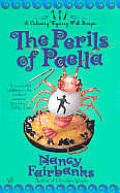
The Peril of Paella by Nancy Fairbanks, a lighthearted foodie mystery set in Barcelona
The Shadow of the Wind by Carlos Ruiz Zafon, the sweeping mystery set in Barcelona (full disclosure: I've been reading this in fits and starts since June '06)
Blue Arabesque by Patricia Hampl, a long essay about art that I read for book group
Henry Huggins by Beverly Cleary, which I read aloud to the boys
The Road by Cormac McCarthy, which I listened to on audio during drive time

The first two on the list are technically shelf-sitters (
Perils since this past summer; Shadow since I received an advanced reading copy in 2003), and the last two were library impulses.

Announcing the Tournament of Books

While it's too late to vote for the readers choice—Zombie—round, you can still read Kevin Guilfoile's opening remarks and begin to anticipate the literary world's own awesome March madness!

This year's list of candidates is outstanding. I've read half of
Arthur and George; I just finished The Road; and I can't wait to see which book(s) make my TBR as a result of this competition (Atkinson, Powers, Shteyngart, and Messud are already on it).

Who will have had enough time to read the Pynchon?

2007 contenders:
Half of a Yellow Sun, Chimamanda Ngozi Adichie
One Good Turn, Kate Atkinson
Arthur and George, Julian Barnes
Brookland, Emily Barton
English, August
, Upamanyu Chatterjee
The Lay of the Land, Richard Ford
Pride of Baghdad, Niko Henrichon, Brian K. Vaughan
The Road, Cormac McCarthy
The Emperor’s Children, Claire Messud
The Second Coming of Mavala Shikongo, Peter Orner
The Echo Maker
, Richard Powers
Against the Day, Thomas Pynchon
Firmin
, Sam Savage
Absurdistan, Gary Shteyngart
Alentejo Blue, Monica Ali
Apex Hides the Hurt, Colson Whitehead

Monday, February 26, 2007

I've never faked it*

but I've thought about it plenty, especially when feeling tired or uninspired. I'll bet you've thought about it too.

Now, there's hope—and an ambitious** French guy to thank.

Merci!

* In the interest of full disclosure, I have faked it at least once. I only managed to read 50 pages of Bleak House for that Dickens tutorial I took junior year in London, but wrote a paper about it nonetheless. Even though I passed with flying colors, I don't think I fooled my tutorial adviser.

**Oxymoron alert. Pierre Bayard, a literature professor at Paris University, has devised a useful system for talking about books that you've never actually read. Here is his inspiration: "We are taught one way of reading," he said. "Students are told to read the book, then to fill out a form detailing everything they have read. It's a linear approach that serves to enshrine books. People now come up to me to describe the cultural wounds they suffered at school. 'You have to read all of Proust.' They were traumatized."


Thursday, February 15, 2007

Progress report

The temperature has been exceedingly cold here in Minnesota—subzero, with and without wind chill. Of course, the only true recourse is hibernation. I opt to go outside as little as I can—going to and from work and running the occasional weekend errand. I would rather hole up under a pile of blankets and read than brave the elements to ice skate or sled or ski.

Both of the boys have been sick over the past few weeks, never at the same time. As a result, I have managed to read quite a bit on all my sick days. Last week I finished The Shadow of the Wind in an epic three-and-a-half hour reading session, the likes of which I haven't experienced on a regular basis since the boys were born. And, it felt so good to just read and read and read, to arrive at the last twenty-five pages at midnight and find the stamina to keep going. Of course, it helped that those last twenty-five pages were the culmination of a gripping two hundred page section. The pacing of this literary bestseller was a little odd—the first half was haltingly slow, while the second half galloped at a break-neck pace.

Over the weekend I polished off a chunk of Heat, Bill Buford’s account of cooking in Mario Batali’s kitchen, which reads, not surprisingly, like a big, juicy New Yorker article. Then, I test-drove a new book for fifty pages, and I’m hooked. It’s Mischa Berlinski’s Fieldwork, a first novel set in Thailand, involving missionaries, demonic possession, taboo sex, and murder. I have yet to get to the parts about demonic possession and taboo sex, but you know the anticipation is compelling.

My book group meets tomorrow, and I’m trying to finish the book we’re reading—Blue Arabesque by Patricia Hampl, a slim meditation, inspired by a Matisse painting, on the odalisque in art. Not only is it boring, but the author is a little insufferable, but I think she had good intentions when she wrote it. I also started listening to Cormac McCarthy’s The Road during drive time, and one disc in, it’s sparse and unnerving.

Next up: Girls of Slender Means for the ongoing Muriel Spark discussion I am having with my friend Caryl.

Monday, February 12, 2007

Perils of Paella


For the past eight or nine years, I have been stoking my interest in Spanish food, drink, and culture. Last summer, John and I threw a tapas party. We renewed our desire to travel the Camino de Real by bicycle. And, I purchased The Perils of Paella, a culinary mystery set in Spain, by Nancy Fairbanks.

Our amateur sleuth is Carolyn Blue, a food columnist for an El Paso newspaper. Carolyn accompanies her husband to Spain. While he is presenting an academic paper, she travels to Barcelona to visit her friend Robbie Hecht, a visiting researcher at a Miro museum. Before the friends even have a chance to meet up in the museum, Carolyn stumbles across a dead body and naturally becomes a part of the investigation.

The mystery is told in the alternating voices of Blue and of Inspector Pujol. The mystery is standard fare, which is exactly what I was hoping for in a quick read. The characters were just this side of addictive. I liked centered Blue, who riffed really well off of feisty Robbie. Pujol was very likeable. The chorus was a host of stereotypes—Latin playboy husbands and their jealous wives, American husbands who attempted to keep their adventurous wives on short leashes. Still, a humorous mix.

Like Diane Mott Davidson’s culinary series starring caterer Goldy Schulz, food plays a central role in Fairbanks’ mysteries. Recipes are included throughout (and, they’re far less intrusive than in Davidson’s books).

I’d happily read another mystery from this series.

Friday, February 02, 2007

Water for Elephants


Before Water for Elephants was published by Algonquin Chapel Hill last May, a number of friends expressed interest in it. Each of them had heard industry buzz from booksellers, who were reading galleys, but I wasn’t sure what about the book intrigued them. In December, a coworker handed me a copy and said, “This book reminded me of why I read.” Even though I avoid popular or hyped books and even though I’m trying to stick to the books on my 39 list, I thought I’d give the first chapter a read over my lunch break.

Sara Gruen’s easy-going storytelling sucked me into the novel. For the length of my lunch break, I was engaged in nonagenarian Jacob Jankowski’s reveries of running away with the circus when he was twenty-one.

Young Jacob’s parents have died in a car accident (I mentioned in an earlier post that this was a common, and annoying, devise in fiction this past fall) the week before he is to sit his veterinary exams at Cornell. Unable to write his exams, and having learned that his parents had mortgaged their home to pay for his education, Jacob realizes he has nothing. So he does what any confused young man in the Depression Era would do—he jumps a train heading out of town.

Later, he discovers that the train is carrying the Benzini Brothers circus, which, with nothing to lose, he then joins. Conveniently for Jacob the circus needs a vet and it falls upon him to care for the menagerie. Soon, the seedy underbelly of a second-rate circus is revealed to Jacob. Behind the performers’ shiny satin-and-sequins costumes is a grimy operation where animals are often fed rotten meat, the hierarchy of workers is brutal, and the owner is prone to having workers chucked off the train in the middle of the night.

It isn’t long before Jacob falls in love with Marlena, who performs with the horses and with Rosie, an elephant that understands only Polish, acquired from a competing circus. Of course, Marlena is married, which is problematic in and of itself, but her husband August is a paranoid schizophrenic who abuses the animals as well as Marlena.

Water for Elephants is a completely engaging read, especially if you long to be transported to another world or to simply experience comforting nostalgia. My circus memories were vividly rekindled. When I was in elementary school, the Ringling Brothers Circus came to town annually. Performed in the high school gym, the event was full of dazzle and daring and hot buttered popcorn and fluffy pink cotton candy.

The story’s ending, heavily criticized in many reviews, was, I thought, pitch perfect.

Wednesday, January 24, 2007

2007 Conversation with Books

On Monday evening, my alma mater hosted its annual alumnae event, Conversation with Books, which I attended with my friend-since-college Caryl and her mother. I have been anticipating this discussion since September, when the list of books was announced. A few weeks ago, as often happens, the panel added a book—The Love of Impermanent Things, by Mary Rose O'Reilley, which I copyedited for Milkweed way back in October 2005.

The panel consists of four women, alumnae-friends who love to read and have been meeting to talk about books for the past 42 years. The each share some comments about each of the books. Since the invitation only goes out to alumnae, it wasn’t until well after I had graduated that I knew about this event. Even then, I can’t say that I was very interested. But a few years ago Caryl told me she and her mother had been to a CWB the previous year and had a nice time. We vowed to attend the next. I had such a great time, I regretted my initial reluctance. Though it seemed odd to pay money to watch, but not participate in, a book group, I rue all the discussion I missed.

Just as Oprah tends to gravitate toward a particular kind of book, so does CWB. They group their selections into categories, one of which is Writers Familiar to Our Conversation. Some examples of repeat-authors include Anna Quindlen, Alice McDermott, Muriel Spark, Iris Murdoch, Penelope Fitzgerald, Alice Walker, Jon Hassler, Madeleine L’Engle, and Barbara Kingsolver. Yes, heavy on women writers, but not surprising for their women's college background and venue. Yes, the group mostly reads fiction, but they do read memoirs and biographies with rich narratives that read as easily as fiction does.

Before the big night, I try to read at least one book because it’s fun to see how the opinions of the panelists compare to my impressions (and I managed to have a few more insights into one of the books I read this year). While I may achieve my reading goal, I find that my work is never done. At the end of each discussion, I inevitably add more titles to my insurmountable TBR list. And, the funny thing, the books I want to read coming out of the conversation are the books I was least i
nterested in reading before I went in. Next year I just may start with those titles.

Here is 2007 list of books:

The Whole World Over by Julia Glass
read it

Joe’s War: My Father Decoded by Annette Kobak
this recaptured story of a Czech soldier as told by his daughter received an amazing review; I'd like to read it

Small Island by Andrea Levy
class, race, culture told in intertwined stories with lovable characters; I’ve toyed with reading since it was published and may read it yet

Eudora Welty: A Biography by Suzanne Marrs
the only positive thing any of the panelists had to say about this dense bio is that it has a great index—and that it made them want to reread either Optimist's Daughter or the short stories; I don't think my life will be any less rich if I give Welty a pass

After This by Alice McDermott
No ringing endorsement here, except to read Charming Billy, an earlier McDermott novel

Suite Francaise by Irene Nemirovsky
Caryl read this and is letting me borrow her copy, which I'm eager to read

The Love of Impermanent Things: A Threshold Ecology by Mary Rose O’Reilley
Beautiful spiritual memoir with observations of the natural world

Rise and Shine by Anna Quindlen
a light-hearted novel of two sisters; could be good vacation fare

Digging to America by Anne Tyler
a novel about adoption, with Tyler's trademark quirky characters

The Optimist’s Daughter by Eudora Welty
classic Welty, classic novel

Monday, January 22, 2007

NBCC finalists are in

The National Book Critics Circle finalists have been announced, and I think it's fair to say that there are no surprises here. From the fiction list, I would like to read Cormac McCarthy's The Road and Dave Eggers's What Is the What, and from the nonfiction list Michael Pollan's The Omnivore's Dilemma has been nagging at me since before it was publishing. I have until March 8 before the winners are announced—better get crackin'.

Wednesday, January 17, 2007

The Whole World Over


Way back in April, as I was looking through the Coming Soon literature "aisle" at Powells.com, I made a note that Julia Glass had written a new book, The Whole World Over. Her debut— Three Junes, a masterful, intricately woven novel of a Scottish family—won the National Book Award in 2002. When a first novel wins a prestigious literary award, you pay attention.

Even though I made a note to read the book, I think this book chose me. I had checked it out from the library no fewer than four times before I cracked the spine, happy to carry it around as long as I could. In November or so,
The Whole World Over appeared on the list for my alma mater's Conversation with Books, an evening of book discussion between four friends (sort of like a book group on stage with an audience). Coincidentally, I had the book in my possession—and I have been slowly, steadily reading it since then.

The emotional core of this novel is Greenie, a Greenwich Village-based chef, who is in apparent need of shaking up her life. Wooed away to New Mexico to cook for the governor, she leaves behind her psychotherapist husband, Alan, and her four-year-old son George. This move sets into action a series of events that changes the course of their lives. Written in rich, dense prose (
Entertainment Weekly called the novel extravagantly long) that sometimes feels like swimming through molasses, Glass uses a lot of words, and somehow, they all seem utterly necessary.

Glass is gifted at weaving multiple storylines, the characters of which pass in and out of the each other’s stories. There’s Walter, Greenie’s gay friend who owns a neighborhood restaurant; Fenno McCleod, the bookstore owner who makes a guest appearance after starring in Three Junes; and Saga, a brain-damaged woman who rescues animals—each complexly drawn.

Places really stand out too. Greenwich Village offers brownstones, the bookshop, and a restaurant; Maine delivers a craggy island where Greenie’s family maintained a rustic cabin; and New Mexico serves up mountains, punctuating luminous skies.

The novel ends with a September 11 moment, and I’m not really sure what to make of it so I’ll leave it at that. Julia Glass doesn’t need comparisons—she’s won the sort of literary award that cements reputations, but I think anyone who likes Barbara Kingsolver will also like Glass.

I'm looking forward to hearing what the Conversation friends have to say about it on Monday evening.

Sunday, December 31, 2006

a year of reading (2006)

1. Don’t Get Too Comfortable (David Rakoff)
David Rakoff, a frequent contributor to PRI’s This American Life, offers a collection of snarky, sharp essays about consumer behavior. Equal parts gut-busting funny and uncomfortably mean-spirited, Rakoff nonetheless lambastes those who revel in greed and excess.

2. The World to Come (Dara Horn)
The novel opens with the theft of a Chagall painting from a Jewish museum during a singles mixer (based on actual events) and alternates storylines with 1920s Soviet Russia. Often mired by heavy-handed imagery (to wit, characters that float or fly, as in a Chagall painting) and repetitive vocabulary and phrases, The World to Come ultimately possesses the potent combination of folklore, romance, history, and mystery. I read this for book group.

3. The City of Falling Angels (John Berendt)
Berendt examines a crime that is as much about the city (this time Venice)—its people and places—as the crime itself, although less successfully than he did in his super-mega bestseller, Midnight in the Garden of Good and Evil. In CoFA, Berendt's jumping-off point is the Fenice opera fire and the resulting investigation. Luscious descriptions of Venice and a depiction of the wacky cast of characters who inhabit the city are nestled into the crime story.

4. Love and Other Impossible Pursuits (Ayelet Waldman)
I devoured this novel in three sittings, which is something I almost never do since I am an excruciatingly slow reader. Funny, sophisticated, and compelling, the story follows hapless Emilia Greenleaf as she navigates the minefield of losing a child and learning to love a stepson. New York City plays a supporting role.

5. Toast (Nigel Slater)
A host of foodstuffs and meals trigger memories of childhood, resulting in powerfully delicious vignettes from cook, cookbook author, and columnist Nigel Slater.

6. The Penderwicks (Jeanne Birdsell)
Humorous situations and wonderfully drawn characters drive this children’s book, which I read for the Storknotes book group. I think the subtitle sums it up best: “A Summer Tale of Four Sisters, Two Rabbits and a Very Interesting Boy.”

7. The Age of Innocence (Edith Wharton)
Far from being just a keen observer, Wharton proves that she is an accomplished novelist with artfully drawn and developed characters, as well as an appropriate amount of tension, in this biting story of 1870s New York society.

8. The Last Templar (Raymond Khoury)
While far from perfect (cheesy romance and implausibly dramatic climax), The Last Templar is a satisfactorily even-paced Gnostic thriller, which one would expect from a screenwriter. It also has one of the most unexpectedly gruesome opening scenes I have ever read.

9. Confessions of a Shopaholic (Sophie Kinsella)
This chick-lit novel was a delightful page-turner—the perfect airplane book for an April vacation in Costa Rica. Utterly predictable with a highly likeable lead character and a London setting, this book provided a great antidote to heavier fare (Arthur and George, which I was reading at the time and which has since been abandoned).

10. The Pythagorean Solution (Joseph Badal)
Hands down, this was the worst book I read this year. Greece setting and hidden treasure was the draw, promising a Davinci Code-esque book, instead it was haltingly paced with horribly stereotyped characters. Read on the beach in Montezuma, Costa Rica.

11. The Calcutta Chromosome (Amitav Ghosh)
One of the best books I read this year—a smart, complex story about malaria and medical discovery, with a conspiracy and a touch of the supernatural. Strongly recommended for those who like William Gibson or Richard Preston. Read on the beach in Montezuma, Costa Rica.

12. The Thai Amulet (Lyn Hamilton)
So far, this has been my favorite book in the archaeology mysteries series (#7) featuring antiques dealer/amateur sleuth Lara McClintock. In The Thai Amulet, the exotic setting (contemporary Bangkok), the parallel historic storyline (16th century Ayutthaya), and the mystery (full of treachery and betrayal) all work harmoniously. Read on the beach in Montezuma, Costa Rica.

13. What Do You Do All Day (Amy Scheibe)
Amy Scheibe, who is an editor at Counterpoint Press, has written an intelligent and funny novel about being a stay-at-home mom with its attendant adventures (high and low). I breezed my way through this book, alternately laughing and crying as the protagonist (Jennifer Bradley, a former antiquities dealer) discovers the joys and struggles of parenting and confronts the challenges of being a modern mother.

14. Their Heads Are Green and Their Hands Are Blue (Paul Bowles)
Paul Bowles is an amazing, sensuous writer, as well as a consummately keen observer. And in this collection of essays, his writing immediately transports you to places that are sweaty, dusty, pungent, and vibrant—places like Sri Lanka, Morocco, and Tunisia. First published in 1963, his travel writing is lyrical and timely. I bought my copy at the fabulous NYC independent bookstore McNally Robinson and chose it for book group.

15. Never Let Me Go (Kazuo Ishiguro)
Ishiguro’s trademark controlled writing is fully present in this novel, which explores an intense relationship between three characters—beginning with their time as children at boarding school until their deaths—which often reminded me of the way Margaret Atwood depicts friendships with rifts and shifts. The backdrop of the novel involves cloning and organ harvest, which smacks right up against the science and ethics topics I love to think about, and it’s an utterly eerie, rib-sticking story.

16. The Prime of Miss Jean Brodie (Muriel Spark)
My friend (and great reader) Caryl and I were inspired to read Dame Muriel Spark after the author’s death earlier this year, starting with her best-known work. Originally published in the fall of 1961 as a short story in the New Yorker, The Prime of Miss Jean Brodie is a striking slim novel that follows an Edinburgh teacher as she molds her “set”—a group of six female students—in her likeness. Wowed by Spark’s concise, witty, stylized writing, Caryl and I vowed to read more from this talented author.

17. The Moai Murders (Lyn Hamilton)
It seems like every time antiques dealer Lara McClintock leaves home, she stumbles across a dead body, even when vacationing on Rapa Nui. Must get old. Vivid descriptions of Easter Island, its history and culture, as well as a well-drawn cast of eccentrics who have gathered for a pseudo-scholarly conference drive the ninth mystery in Hamilton’s archaeology series. Read aloud to John on a So Dak road trip.

18. Leap Days (Katherine Lanpher)
I’ve had a real love-hate relationship with Katherine Lanpher (hate her voice; love the touching piece she wrote memorializing George J.). But she really endeared herself to me in this unvarnished memoir, detailing her midlife move from the Midwest to New York City. I enjoyed reading about the trajectory of her career (from a print journalist to a radio personality—first as the host of a Minnesota Public Radio show, then as the cohost on Al Franken’s Air America program). Local references to people and places abound (she stays with friend Sarah M’s brother whenever she visits St. Paul).

19. Dark Tort (Diane Mott Davidson)
Caterer Goldy Schulz also has the unfortunate habit of tripping over dead bodies as she’s minding her own business, serving up food at functions in Aspen Meadow, Colorado. This is the latest (#13) in Davidson’s culinary mystery series. I found the mystery, while cohesive, lacked the energy of previous books in the series, but the scenes of Goldy doing what she does best—planning menus and cooking food—continue to drive the story.

20. The Girls (Lori Lansens)
I read this novel about conjoined twins for book group, otherwise I’m fairly sure I never would have picked it up. Some of it was downright creepy. While the sensitive, and sometimes beautiful, novel received a lot of review attention—including a glowing assessment from Prairie Lights buyer Paul Ingram—sales never really took off. It should do well in paperback, especially with book groups.

21. The Comforters (Muriel Spark)
The second installment in the Spark study group. This was Spark’s first novel, which she wrote at 39. From the first sentence, you can tell that the author is going to have fun with the novel’s form, writing a nicely multilayered metafiction. Spark also begins exploring themes—such as Catholicism and religious conversion—that she’ll continue throughout her prolific writing life.

22. My Life in France (Julia Child)
What a treat to read an account of Julia’s love affair with France. You can see, hear, and smell Marseilles, where her loving husband Paul was stationed in a government position following WW2. It’s also a treat to read Julia’s own account of writing Mastering the Art of French Cooking, which was well detailed in Janet Finch’s bio, but here in My Life, the challenges of working with Simca and Louisette seem rendered with less gossip. I can’t wait to read this again.

23. Promise Me (Harlan Coben)
Even though I’ve really missed Myron Bolitar (it has been six years since Coben "retired" him), I’d just like to say, for the record, that Coben should have stuck to the stand-alone thrillers that have earned him New York Times bestselling-author status. Without even getting into the lame-o, convoluted plot, Bolitar came off as a big whining baby, and his sidekicks—Win and Esperanza—barely make an appearance. It certainly wasn’t the worst book I read this year, and I’ll likely read the next in the series—as always, aloud to John.

24. The Reach of a Chef (Michael Ruhlman)
Ruhlman’s third chef book, marked by graceful writing, explores what it means to be a celebrity chef. My favorite section follows Grant Achatz from his time spent in Thomas Keller’s French Laundry kitchen to a field trip in Spain where he had his defining moment at Ferran Adria’s el Bulli. Ruhlman concludes that the reach of a chef is beyond the kitchen. By expanding their restaurants, celebrity chefs give younger chefs who have been working under them an opportunity to run a kitchen.

25. Bye-Bye Black Sheep (Ayelet Waldman)
Two books from Ayelet Waldman in one year will spoil me for next year. In this fifth Mommy Track mystery, Juliet Appelbaum—a former public defender turned stay-at-home mom—solves another crime in LA. I love Waldman’s sharp, feisty heroine and hope a sixth mystery is published in 2007. Please.

26. The Book of Story Beginnings (Kristin Kladstrup)
The office manager at my office loaned me this book, which was written by her stepsister. It’s a children’s chapter book set in a part of Iowa I’ve passed through on RAGBRAI. And, it’s a highly imaginative adventure featuring a magic notebook where story beginnings come true, but the characters don’t know how they’ll end, nor can they control the journey.

27. The Dissident (Nell Freudenberger)
When I read the young author’s much-hyped collection of stories (Lucky Girls) a few years ago, I was suitably impressed—enough so to look forward to any fiction she might write in the future. So, I was thrilled to find a big ol' 400+ page novel this fall. Also, I wasn’t disappointed by it. The story follows a Chinese artist and the members of his incredibly dysfunctional SoCal host family. Not all is as it seems, for anyone. Very nicely done.

28. Memento Mori (Muriel Spark)
Installment three in the Spark study group. This novel about Death features the geriatric set—a group of octogenarian friends who are receiving crank phone calls. At the other end of the line is a voice telling each, “Remember, you must die,” (memento mori). The phone calls unleash a history of deception and tangled relationships as well as lend a spooky feel to the novel, another trim but dense story.

29. The Big Oyster (Mark Kurlansky)
In this satisfying microhistory, Kurlanksy turns his attention to the oyster beds that existed off the shores of Manhattan, ranging from before Europeans arrived until the 1930s when the beds were deemed too polluted. I love what Kurlanksy does best—writing a history imbued with economics, sociology, marine biology, culinary history, and the environment—and I’d like to read more. Thank goodness for Salt and Cod.

30. The Keep (Jennifer Egan)
I didn’t love Egan’s first two highly acclaimed novels, which Picador published when I was at Holtzbrinck and was under direct orders to love. But, Charles Baxter called Egan’s Look at Me underrated, and The Keep received strong advanced review attention, so I picked it up. No regrets here. It’s a yummy Gothic ghost story as well as a metafiction—both of these elements are sure to keep readers on their toes. I nearly started re-reading it immediately—it’s that good—but I don’t re-read (so many books, too little time dictates).

31. The Templar Legacy (Steve Berry) audio
I could get a lot a reading done by listening to audio books. Benefiting from quick plot pacing,The Templar Legacy was an ideal book to “read” in this format. Another Gnostic thriller, but this one delves deeper into Templar history and lore, and has a twist I couldn’t have anticipated even if I had been paying closer attention. Unabridged.

32. Testing Kate (Whitney Gaskell)
Gaskell, an accomplished author of lit lite, gives me a birthday gift each year in the form of a new novel. Isn’t she sweet? This year, she draws upon her experience as a law student, setting her romantic comedy during One-L at Tulane. Written before Katrina, the city of New Orleans plays a supporting role. Coincidentally, this is the third novel (nearly in a row) I have read this fall involving a protagonist whose parents have died in an accident (The Dissident and The Keep also used this device to cleverly keep pesky parents in the background).

33. Housekeeping vs. The Dirt (Nick Hornby)
Another collection of Hornby’s columns from The Believer. The premise of the columns is clever—wish I’d thought of it first. Each month, Hornby lists separately his book purchases and the books he read, then analyzes his choices. The essays are also shamelessly peppered with personal connections (such as Hornby’s brother-in-law, the bestselling author Robert Harris, or his good friend Violet Incredible, aka Sarah Vowell) and strewn with complaints about the Polysyllabic Spree (roughly, The Believer’s editorial staff), which are a delight to read. I will not be able to sit still for a third volume.

34. Stuart Little (E.B. White)
I read this aloud to the little boys on our Thanksgiving trip to Los Angeles. They loved Stuart’s adventures, but neither questioned how it was that the human Little family came to have a mouse child. John and I each remembered loving this story when we were kids, and we commented on E.B. White’s genius. Charlotte’s Web is up next for us, and I believe Trumpet of the Swan, which I have never read, is in our near future.

35. An Alphabetical Life (Wendy Werris)
I’m a sucker for books about books and books about bookstores, but Wendy Werris’s memoir trumps all as it is both of those and a book about book reps, which makes an ideal framework for her memoir—coming of age in the book biz. It’s also a vivid portrait of Southern California in the 1970s and a lovely tribute to her father, who was a comedy writer for Jackie Gleason, among others. Read on Los Angeles vacation.

36. Chicken with Plums (Marjane Satrapi)
In Satrapi’s latest graphic memoir, she relates the story of her great-uncle, a famous Iranian musician. After his tar (a stringed instrument) is broken and he fails to find a replacement, he takes to his bed in despair—deciding he cannot continue living. Flashbacks and flash-forwards dominate the storytelling, which, with Satrapi’s signature style meld tradition with pop culture in a very satisfying way.

37. Frank Lloyd Wright (Ada Louise Huxtable) audio
A concise, but lively, biography—part of the Penguin Lives series—written by the Wall Street Journal’s architecture critic. After checking the book out on a number of occasions this year, yet never getting to read it, I decided I might have better luck to listening to it. Wright’s story proved to be just the inspiration I needed to face the day writing about architecture. Unabridged.

38. Girl in Landscape (Jonathan Lethem)
This fall, Powell’s sent me a review of Girl, which knocked my socks off. So I requested a copy from the library and, despite having other reading obligations, devoured it in a few sittings. Lethem deftly weaves a coming of age set during colonization, which yields a novel rivaling the best science fiction. Protagonist Pella Marsh is one of the most intense and likeable characters I have met this year. Images of the Archbuilders, their planet’s desolate landscape, and household deer will stick with me for some time.

39. How I Learned to Cook (edited by Kimberly Witherspoon and Peter Meehan)
Forty of the world’s greatest chefs write about the events that inspired them to cook. My favorite essays were written by Rick Bayless (who writes about coming of age while pouring over Julia Child’s Mastering the Art of French Cooking, which he had to convince his parents to buy for him instead of football equipment, then lives a dream when he’s asked to appear on one of her TV series), Suzanne Goin (who writes about a lousy stage in a Michelin two-star restaurant in France), and David Chang of Momofuko (who writes about his noodle education in Japan).

40. Charlotte’s Web (E.B. White)
Continuing with our E.B. White education, I read this children’s classic to the little boys. White richly depicts a Maine farm, replete with talking animals and a spider, named Charlotte, who saves a pig from slaughter. She does it by weaving messages about Wilbur into her web, thereby creating celebrity and preventing him from becoming bacon and ham. It’s extraordinarily touching the way Charlotte finds and lauds the exceptional in her friend.

Friday, December 08, 2006

Micawbers to close

Earlier this week, the Daily Princetonian reported that Micawber Books—my favorite bookstore in the U.S.—will close in early 2007. I find this news devastating on so many levels. Chiefly, I think about my personal enjoyment and how the store is an important part of our family visits to Princeton. But Micawber is a fine independent business and a top-notch bookstore and should remain in the landscape to serve as blessed relief from the crappy, generic, soulless chainstores of America.

John and I have been visiting Micawber for the past ten years. John's mother lives within walking distance from the store's location in Palmer Square, right across from the main gates of Princeton U. When we first started visiting, the store was small, selling mostly used books with a carefully edited selection of new books at the front of the store. Each row is graced by a sculpture made from found book objects (typewriters, books, pens, paper, printing blocks) and hung on the wall that runs perpendicular to the shelves. One year we noticed a new bookstore in the adjacent retail space and wondered how Micawber would fare only to learn that Micawber had expanded the new books into a much larger space.

We have this lovely little ritual where we ditch the kids (who are happily playing with their cousins or watching movies on the third floor) with Gma and Gpa and walk downtown. After a quick sushi lunch at our favorite no-frills campus sushi place*, we hit Micawber Books—and hit it hard. While we're no strangers to strong independent bookstore—heck, we used to have a few nearby in St. Paul—there is something special about this one. The booksellers' tastes in books match ours. To a T. Since we are bookstore geeks, we even have a ritual for shopping. We each take a side of the long display tables that run the length of the store, sharing our finds, each commenting that we can't wait to hit the other side. The only rule we have is pick up anything that interests you because, unless you make a physical list, you may never see the book again. I try to limit my purchases to one or two books (for me, and a couple for the kids). Maybe we'll pick up a last minute holiday gift for someone, which is always fun.

The store will be open until March so we will make our final visit in a few weeks. I fear that its spirit will have been deflated. By fall '07, Labyrinth Books, which already has locations near Columbia U. and Yale, will open. The staff picks on their website give me optimism. Even though it will never replace Micawber, I'm pleased that Princeton will continue to support an independent bookseller.

Meanwhile, check out St. Paul's Micawbers, which a long-time acquaintance co-owns.

*I don't even know the restaurant's name, but we love it. Essentially, it's take-out though you can grab a stool and a two-top (the coveted six-top is always taken), and all the sushi is prepared fresh by a sushi chef at a sushi bar. The menu is on a big board opposite the sushi counter. You make your own green tea in a styrofoam cup by adding water from a dispenser to a tea bag; likewise with the packet of instant miso soup. Sushi is served on a disposable tray, like the kind you get with grocery story sushi, and matching tiny trays hold soy sauce.

Wednesday, December 06, 2006

Muriel Spark

When Dame Muriel Spark died earlier this year, I realized that, although Spark has been a long-time member of my TBR list, I’d never read her. My friend Caryl coincidentally expressed an interest to read Spark and thus we launched a small, focused study of her work. For our starting point, we chose The Prime of Miss Jean Brodie, arguably her best-known novel and #76 on the Modern Library’s 100 Best Novels of the Century. Next came The Comforters, which was her first novel, and we followed it with Memento Mori.

A few biographical notes about Spark: she wrote her first novel at 39 (pas mal), converted to Catholicism in order to “see human nature clearly,” abandoned her son when he was a child and had a strained relationship with him as a result. Graham Greene and Evelyn Waugh—a few of my favorite 20th century novelists—thought highly of her writing.

With an economy of language and—as a review in the New York Times aptly described it—a firm voice, Spark deftly created character-rich novels with interesting plots. Ultimately, I’d like to read every novel Spark wrote, as well as her short stories and memoir. I don’t think it matters where you start if you’re reading Spark for the first time (at least it doesn’t seem so to me with only three early novels under my belt). But, I highly recommend that you do read her!

#16, The Prime of Miss Jean Brodie
Originally published in the fall of 1961 as a short story in the New Yorker, The Prime of Miss Jean Brodie is a powerful slim novel that follows an Edinburgh teacher as she molds her “set,” a group of six students, in her likeness. Although I remember loving Maggie Smith’s portrayal of the title character in the movie version, Miss Brodie is hardly likeable; she’s bitter and resentful and dwells ridiculously on her “prime.” She’s also obsessed with fascism. Spark continues her examination of religion in this novel as much of it is seen through the prism of Sandy Stranger, who became a nun. I love the way Spark moves the story easily back and forth through time, often within the same chapter.

#21, The Comforters
In her first novel, Spark wastes no time experimenting with form, offering an accomplished and daring metafiction and drawing some delicious characters. The Comforters features Caroline, Laurence Manders’ girlfriend who has just converted to Catholicism. Early on, Caroline hears typewriter keys and a narrative voice, which is driving the novel. The story also features a ring of smugglers led by Laurence’s granny, as well as a busybody anyone would love to hate (Georgina Hogg). The New York Times (September 1, 1957) review said, “It is both enjoyable and memorable. Trend-watchers are advised to note the name of Muriel Spark. Before very long they may be able to boast that they read her when.”

#28, Memento Mori
This novel about Death features the geriatric set—a group of octagenarian friends who are receiving crank phone calls. At the other end of the line is a voice telling each, “Remember, you must die,” (memento mori). The phone calls unleash a history of deception and tangled relationship. They also lend a spooky feel to the novel, another trim but dense story. One of my favorite characters, Alec Warner, is a researcher who compiles statistics about the aging. Comically, he is forever asking characters to take their temperature and pulse when they’ve had a conversation or a threatening phone call so he can record the data. Mind you, these situations are constantly arising, and at times I was curious about how Warner would keep up with or make sense of his compilations. Spark provides a wholly satisfying final chapter that reveals the characters’ fates.

Up next: Girls of Slender Means