Tuesday, January 27, 2009

NBCC finalists announced

I've been out of pocket for almost two weeks, so I was delighted to learn that the National Book Critics' Circle announced their list of finalists for the best books published in 2008. You can read more on the NBCC's blog. All of the fiction finalists are on my TBR list, as are Rick Bass and Andrew Pham.

Fiction Finalists
Roberto BolaƱo, 2666 (Farrar, Straus)
Marilynne Robinson, Home (Farrar, Straus)
Aleksandar Hemon, The Lazarus Project (Riverhead)
M. Glenn Taylor, The Ballad of Trenchmouth Taggart (West Virginia University Press)
Elizabeth Strout, Olive Kittredge (Random)

Poetry Finalists
August Kleinzahler, Sleeping It Off in Rapid City (Farrar, Strauss)
Juan Felipe Herrera, Half the World in Light (University of Arizona Press)
Devin Johnston, Sources (Turtle Point Press)
Pierre Martory (trans. John Ashbery), The Landscapist (Sheep Meadow Press)
Brenda Shaughnessy, Human Dark with Sugar (Copper Canyon Press)

Criticism Finalists
Richard Brody, Everything Is Cinema: The Working Life Of Jean-Luc Godard (Metropolitan)
Vivian Gornick, The Men in My Life (Boston Review/MIT)
Joel L. Kraemer, Maimonides: The Life and World of One of Civilization’s Greatest Minds (Doubleday)
Reginald Shepherd, Orpheus in the Bronx: Essays on Identity, Politics, and the Freedom of Poetry (University of Michigan Press)
Seth Lerer, Children’s Literature: A Reader’s History: Reader’s History from Aesop to Harry Potter (University of Chicago Press)

Biography Finalists
Paula J. Giddings, Ida, A Sword Among Lions: Ida B. Wells and the Campaign Against Lynching (Amistad)
Steve Coll, The Bin Ladens: An Arabian Family in an American Century (Penguin Press)
Patrick French, The World Is What It Is: The Authorized Biography of V.S. Naipaul (Knopf)
Annette Gordon-Reed, The Hemingses of Monticello: An American Family (Norton)
Brenda Wineapple, White Heat: The Friendship of Emily Dickinson & Thomas Wentworth Higginson (Knopf)

Autobiography Finalists
Rick Bass, Why I Came West (Houghton Mifflin)
Helene Cooper, The House on Sugar Beach (Simon and Schuster)
Honor Moore, The Bishop’s Daughter (Norton)
Andrew X. Pham, The Eaves of Heaven (Harmony Books)
Ariel Sabar, My Father’s Paradise: A Son’s Search for His Jewish Past in Kurdish Iraq (Algonquin)

Nonfiction Finalists
Dexter Filkins, The Forever War (Knopf)
Drew Gilpin Faust, This Republic of Suffering: Death and the Civil War (Knopf)
Jane Mayer, The Dark Side (Doubleday)
Allan Lichtman, White Protestant Nation (Atlantic)
George C. Herring, From Colony to Superpower: US Foreign Relations Since 1776 (Oxford University Press)

Balakian Finalists
Michael Antman
Kathryn Harrison
Laila Lalami
Todd Shy

Friday, January 16, 2009

my favorite books of 2008: the nonfiction edition

What I Talk About When I Talk About Running (Haruki Murakami)
Quite frankly, I’m not really sure why I picked up this book. I’m not a runner. I’ve never read a Murakami novel, although he’s been on my radar for a long time. I found the Raymond Carver reference sly and pickupable. Ultimately, the size and scope of this meditation on art and sport was very appealing. Admittedly, whenever I dipped into Murakami's What I Talk About When I Talk About Running, at each mention of running, I inserting “cycling,” which worked really well. I also enjoyed reading about how he became a novelist and about his habits and practices as a writer. This is a slim volume that you think you're going to breeze through until you find yourself copying down the clever bits and mulling them before you start reading again and suddenly it takes three weeks to read a 5 x 7-trim size with wide margins. I hope that reading my first Murakami novel will be a treat equal to reading What I Talk About When I Talk About Running.

Gumbo Tales (Sara Roahen)
Roahen’s “memoir” is framed in the foodstuffs that are particular to New Orleans, with chapters addressing gumbo (of course), red beans and rice, oysters, and chicory coffee, but also sno-balls (a shaved ice and syrup treat), King cakes (the disturbingly sweet Mardi Gras pastry), sazeracs (the rye whiskey and bitters–based cocktail), and pho (NOLA has a burgeoning Vietnamese population). Gumbo Tales is enjoyable on many levels. Roahen’s writing is rich and vivid, and through it, her character is fully expressed. Every time I dip into her prose, I’m instantly transported to New Orleans, wishing I had a steaming pile of crawfish on the table in front of me. In addition to all the food business, this book is such a fitting homage to all that New Orleanians lost to Hurricane Katrina. At the same time, New Orleans is given props for its resilience—I don’t think any natural disaster or act of God could take away that city’s sass!

Shakespeare Wrote for Money (Nick Hornby)
When my friend Caryl e-mailed me the announcement for Nick Hornby’s third—and last—collection of his Believer columns, I scoured the local bookstores immediately. Even though Amazon said the book was in stock, implying that their warehouses had received inventory and were able to ship, however, none of my local indies had received their initial order. It’s so unfair. Nonetheless, the book arrived a few days later, and I loved it all the same.

Hornby never disappoints—not even in September 2006 when he was obsessed with the World Cup and didn’t read any books. So much of this collection was laugh-out-loud funny, and I’d find myself reading passages to John, like this one from Hornby’s February ’08 column, which struck a pitch-perfect chord with us.
I turned back to Spufford’s book [the memoir, The Child That Books Built] because my five-year-old is on the verge of reading…Writing hasn’t softened for him: three-letter words are as insoluble as granite, and he can no more look through writing than he can look through his bedroom wall. The good news is that he’s almost frenetically motivated; the bad news is that he is so eager to learn because he has got it into his head that he will be given a Nintendo DS machine when he can read and write, which he argues that he can do now to his own satisfaction—he can write his own name, and read the words Mum, Dad, Spider, Man, and at least eight others. As far as he is concerned, literacy is something that he can dispense with altogether in a couple of months, when the Nintendo turns up. It will have served its purpose.
I'm pretty sure we've had this conversation with each of our kidlets. And, no lie, every page has a gem like this, which makes me profoundly sad that there will be no more Hornby in The Believer. I love the format of Hornby’s columns. Each month he makes a list of the books he purchased, as well as a list of the books he read, which he then reviews in an “easily digestible, utterly hysterical” fashion.

Shark’s Fin and Sichuan Pepper (Fuchsia Dunlop)
Like Gumbo Tales, Shark’s Fin and Sichuan Pepper is one of those enviable books that was born from the author's eats and travels and writings about eating and traveling. I acknowledge that this subgenre of memoir/personal essay is burgeoning and the bookshelves are somewhat glutted. But, make an exception for Fuchsia Dunlop. She has the added benefit of wicked smarts, with an advanced degree in economics, combined with a not too cloyingly clever sense of humor. Her memoir of eating in China is delectable.

The Guardian called this book a “cultural immersion,” which is apt, as her memoir entails much more than food. Beginning in the early 1990s, Dunlop lived in China, off and on, for over a decade. As a student—and as a professional writer—she has traveled to remote corners of the country, engaging every person she could in conversation. That rich experience certainly imbues her writing with great depth. Between descriptions of food and meals, Dunlop dazzles with history, geography, modernization, growth, and more. With the exception of the requisite SARS chapter, almost every page made me want to eat Sichuan food in Sichuan province, but until then I'll settle for the Tea House or Little Szechuan.

Monday, January 12, 2009

my favorite books of 2008: the fiction edition

In no particular order, my favorite novels of 2008:
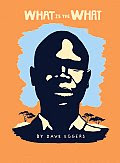
What Is the What (Dave Eggers)
This book came to my attention long before I picked it up, and when I finally read it, I breathed a sigh of relief, for the payoff was worth the anticipation. I will also admit that I bought this book for the jacket. McSweeney’s is doing some really neat things with cover design, using unconventional trim sizes, eye-catching graphics, and awesome fonts. And the paper over boards—I love the paper over boards. What Is the What read like a memoir, following the story of Valentino Achak Deng, one of the Lost Boys of the Sudan, now in the U.S. As Valentino endeavors to make the most of the opportunities afforded him here, he experiences a number of situations that raise the question: is he better off here in the U.S. than in his civil-war-torn country, where his village was burned and his family killed? Heavy, I know, but leavened by humor and just impeccably written. I never read Eggers’ staggering genius memoir but I think What Is the What might be Eggers’ staggering genius.

Miss Pettigrew Lives for a Day (Winifred Watson)
First published in 1938, Miss Pettigrew Lives for a Day is currently in print from Persephone Books, the super-cool British publisher that specializes in reviving lost twentieth-century classics, mostly written by women. Guinevere Pettigrew is sent by an employment agency to the wrong house. Instead of the governess job she was expecting, Miss Pettigrew finds herself thrust into a new role as social secretary to a nightclub singer, Miss LaFosse. And hijinks ensue. I loved Watson’s wit, humor, and carefree storytelling. Lighthearted line drawings make a charming package, immediately drawing the reader into the period (1930s) and spirit of the novel. I also saw—and loved—the movie for its' own merits, such as the pitch-perfect performances of Amy Adams and Frances McDormand.

Then We Came to the End (Joshua Ferris)
I was thrilled when Suzanne chose Then We Came to the End as a book group selection because it was on My List. This first novel had come to my attention before it hit store shelves: Reagan Arthur, a friend from SMP days, is the editor, and I’d read anything she publishes. Early reviews were strong, word of mouth helped build my interest, and then the book was nominated for a National Book Award—all signs pointed to Yes. But this darkly funny novel set during the dot-com bust—about the last days of an ad agency and the attendant layoffs—hit too close to home. At that very moment in time, the magazine group where I worked as an editor was for sale, my future uncertain. Before long, we had a new owner, who let everyone go. However, had I started the book immediately instead of letting it feed into the big dread-pit that had taken the place of my stomach, I might have had a few more hearty chuckles during that dark period. Also, I might have played more office pranks. Okay, I probably wouldn’t have played pranks. After all, I stayed on the sinking ship because the odds were somewhat in my favor. Back on topic, Ferris is a comedic genius, and I loved Then We Came to the End. If you’ve ever worked in an office, you’ll recognize the characters. The situations, however, are appropriately outlandish. I can’t wait to see how Ferris follows up.

Casino Royale (Ian Fleming)
Casino Royale is the first book in Ian Fleming’s spy series starring James Bond. Sure, the novel has all the elements we’ve come to expect in a Bond movie—action, girls, bad guys with evil henchmen, exotic locales. But, if you’ve only seen the movies, you might not know that Bond has a rich interior life and is a little dark, which I found pleasantly surprising. While in the hospital, healing from torture at the hands of bad guy Le Chiffre (in the same brutal fashion as the 2006 movie w/Daniel Craig), Bond has a crisis of conscience and doubts whether he can continue as a “00,” licensed to kill. Bond recovers and recommits himself to fighting evil. Ian Fleming has a casual and suave literary style. I can only imagine what it was like for a reader in 1953—with no predisposition to any movie-screen Bond—to have met this character.

Atmospheric Disturbances (Rivka Galchen)
A glowing New York Times book review piqued my attention for Atmospheric Disturbances, a first novel by the remarkably talented and young Rivka Galchen, and then I got a thumbs-up from a friend who was enjoying it. Like Ethan Canin, Galchen has an MFA and an MD and is utterly gorgeous, though the comparisons to Canin end there. Galchen has churned out a complex novel that hinges on a 51-year-old psychiatrist, Leo, who believes that his much-younger Argentinean wife has been replaced by a doppelganger. Leo’s search for his original wife comprises much of the ambitious plot. (You really need to read the Times review where Liesl Schillinger does a better job summarizing the plot and making comparisons than I could ever hope to.) If it hasn't become abundantly clear yet, I'll come right out and say it: I’m a huge sucker for first novels. Atmospheric Disturbances had very few disappointing moments.

Honorable Mentions:
~ The Invention of Hugo Cabret (Brian Selznick)
As my friend Caryl said about The Invention of Hugo Cabret, “It’s a must read.” The novel's intricate story of an orphaned boy—who lives in a Paris train station, surviving on his wits and building a mechanical man—is illustrated with Selznick’s amazing pencil sketches. Paris is truly seen in a new light. Intended for middle readers; recommended for all ages.

~ discovery: Donna Leon
I kicked off 2008 by reading Donna Leon's Suffer the Little Children, the sixteenth book in the Commissario Brunetti series. Leon writes a compelling police procedural, with an outstanding protagonist and a supporting cast of characters. Brunetti adores his wife and family, eats fine food, reads history tomes, and endures tourists. The setting is Venice, and Leon's descriptions will encourage you to bump Italy to the top of your travel list. I followed up Suffer the Little Children (in January, it was the series' most recent title, as well as a Conversation with Books selection) with the first two books in the series, Death at La Fenice and Death in a Strange Country, and I recently finished Dressed for Death.

~ discovery: Alexander McCall Smith
Often I dream about reading an entire series, "in one sitting," figuratively speaking. Imagine my luck, then, when Caryl offered me her Isabel Dalhousie books by Alexander McCall Smith. Seeing as I have a weakness for character-driven fiction, as well as stories with a strong sense of place, I found Isabel and her Edinburgh utterly irresistible. This series is categorized as mystery, though there's not much mystery—certainly no murders—rather situations to which Isabel is drawn so that she may "help." Other recurring characters include Isabel's niece, Cat, as well as Jamie, a young musician who becomes a love interest (I don't think that's a spoiler as you can see this coming from the first book). Isabel is the editor of the Journal of Applied Ethics, spending her days thinking about philosophical dilemmas and deciding which papers to publish in the magazine. A charmed life, I know. By the time I finished reading the fifth consecutive book, I had grown a little weary of Isabel and some of her choices. But given some distance, I will certainly be back for number six, whenever it is published.

Wednesday, December 31, 2008

Books Read in 2008, plus statistics

1. Suffer the Little Children (Donna Leon), Conversation with Books, 40 for 40
2. What Is the What (Dave Eggers), book group, 40 for 40
3. Himalayas (Michael Palin), unabridged audio
4. Service Included (Phoebe Damrosch)
5. Death at La Fenice (Donna Leon)
6. Sunday Philosophy Club (Alexander McCall Smith), unabridged audio, re-read
7. Trail of Crumbs (Kim Sunee)
8. The Omnivore’s Dilemma (Michael Pollan), book group, 40 for 40
9. A Taxonomy of Barnacles (Galt Niederhoffer), 40 for 40
10. The View from the Seventh Layer (Kevin Brockmeier)
11. Miss Pettigrew Lives for a Day (Winifred Watson)
12. Death in a Strange Country (Donna Leon)
13. Beezus and Ramona (Beverly Cleary)
14. Shark’s Fin and Sichuan Pepper (Fuchsia Dunlop)
15. Maisie Dobbs (Jacqueline Winspear), unabridged audio
16. Devil May Care (Sebastian Faulks)
17. Then We Came to the End (Joshua Ferris), book group
18. Petite Anglaise (Catherine Sanderson)
19. Kitchen Confidential (Anthony Bourdain), read aloud to Mr. Bibliotonic, re-read
20. All We Ever Wanted Was Everything (Janelle Brown)
21. Abbess of Crewe (Muriel Spark)
22. Hens Dancing (Raffaella Barker), Reading Circle
23. A Death in Venice (Daniel Silva), read aloud to Mr. Bibliotonic
24. Homer Price (Robert McCloskey), read aloud to little Bibliotonics
25. Casino Royale (Ian Fleming)
26. Crime Brulee (Nancy Fairbanks)
27. Centerburg Tales (Robert McCloskey), read aloud to little Bibliotonics
28. Let’s Get Primitive (Heather Menicucci)
29. Guernsey Literary and Potato Peel Pie Society (Shaffer & Barrows)
30. Kenny and the Dragon (Tony diTerlizzi), read aloud to little Bibliotonics
31. Truffled Feathers (Nancy Fairbanks)
32. Summer at Tiffany (Marjorie Hart)
33. The Invention of Hugo Cabret (Brian Selznick)
34. The Man Who Ate the World (Jay Rayner)
35. Thirty-Three Teeth (Colin Cotterill)
36. Annunciations of Hank Meyerson, Scholar and Mama’s Boy (Scott Muskin), book group
37. Life Class (Pat Barker), unabridged audio, '09 Conversation with Books
38. People of the Book (Geraldine Brooks)
39. What I Talk About When I Talk About Running (Haruki Murakami)
40. Real World (Natsuo Kirino)
41. Coraline (Neil Gaiman), graphic novel
42. Lulu in Marrakech (Diane Johnson), 41 for 41
43. The Mist (Stephen King)
44. Gumbo Tales (Sara Roahen)
45. Summertime (Raffaella Barker)
46. Friends, Lovers, Chocolate (Alexander McCall Smith), 41 for 41
47. Atmospheric Disturbances (Rivka Galchen)
48. Right Attitude to Rain (Alexander McCall Smith)
49. The Tenth Muse: My Life in Food (Judith Jones)
50. French Milk (Lucy Knisley), Reading Circle
51. Shakespeare Wrote for Money (Nick Hornby)
52. Careful Use of Compliments (Alexander McCall Smith)
53. The Ruins (Scott Smith), audio
54. The Comforts of a Muddy Saturday (Alexander McCall Smith)
55. Immoveable Feast (John Baxter), Reading Circle
56. Deltora Quest 01: The Forests of Silence (Emily Rodda), read aloud to little Bibliotonics
57. Deltora Quest 02: The Lake of Tears (Emily Rodda), read aloud to little Bibliotonics
58. Deltora Quest 03: City of Rats (Emily Rodda), read aloud to little Bibliotonics
59. How to Train Your Dragon (Cressida Cowell), read aloud to little Bibliotonics
60. How to Be a Pirate (Cressida Cowell), read aloud to little Bibliotonics
61. Warriors 01: Into the Wild (Erin Hunter), read aloud to little Bibliotonics

Statistics
Fiction: 44
Nonfiction: 16
Books written by women: 34
Books written by men: 26
40 for 40 challenge: 4
41 for 41 challenge: 2
Mystery/thrillers: 17
Culinary essays: 9
Travel essays: 1
First novels: 6
Memoirs: 6
Books published in 2008: 17
Graphic novels: 2
Children's books: 12
Books by Donna Leon: 3
Books by Alexander McCall Smith: 4
Audio: 5
Story collections: 1

Friday, December 26, 2008

notes on vacation reading

The boys are outside tossing the football, which give me a moment, while on vacation, to sneak away for some writing. My mother-in-law’s house is large but full, and the sound of loud (albeit joyful) children carries in unexpected ways. I’m really not very good at filtering the chaos so reading has been difficult, though I’m managing where I can. For example, on Tuesday, Mr. Bibliotonic and I took the boys into New York City to visit the Natural History Museum. Part of my duty as copilot was to read aloud to the driver and passengers so I started Tunnels, a fantasy for middle readers by Roderick Gordon and Brian Williams.

In the first few chapters, we’ve been introduced to Will, our fourteen-year-old protagonist, and his father, a museum curator. They’ve been digging a tunnel in their London suburb and have discovered what seems to be a long-abandoned underground railway line. In a parallel storyline, a construction worker, in knocking out a brick wall for his employer, has stumbled upon a secret passage, as well as a window through which he can see people clad in Victorian garb, executing some task. Even though the story and characters have piqued my interest, the authors are slow to reveal, teasing the plot out painfully—already, I feel like they need to pick up the pace a bit.

I’m also getting caught up on New Yorker back issues, starting with the November 24 food issue. I loved Jane Kramer’s article about Jeffrey Alford and Naomi Duguid, self-taught anthropologists and authors of such award-winning cookbooks as Hot Sour Salty Sweet, about the Mekong Delta’s culture, people, and food. Kramer provides an unvarnished look at how the couple met (he was a part-time smuggler and light heroin user, she was a lawyer on vacation); the life they created, for themselves and their two sons, as world travelers/observers/connoisseurs; and their process for research and writing their marvelous cookbooks. The winter fiction double issue also awaits me. I purchased it mainly for the Roberto Bolano story, which I’m hoping will tide me over until I can crack 2666 and Savage Detectives.

Thursday, December 25, 2008

happy merry to all!

It’s Merry Chaos here in Princeton. Has a year gone by already? The weather is gorgeously warm, which is such a treat after the brutal winter storms and their aftermath that we've encountered at home and here on the East Coast. The sky is a beautiful blue color, which I'm enjoying from the playroom's picture windows while I catch up on New Yorker back issues and read Graham Robb's The Discovery of France.

And, my kids have each declared this to be the Best. Christmas. Ever! Surrounded by family, I couldn't agree more.


No matter where you are and what you believe, I hope that your day is filled with peace and glad tidings!

Thursday, December 18, 2008

currently reading

~ The Comforts of a Muddy Saturday (Alexander McCall Smith)
Close on the heels of finishing The Careful Use of Compliments, the fourth Isabel Dalhousie novel, I started The Comforts of a Muddy Saturday. Published in September ’08, Muddy Saturday is the latest book in the series. Potential SPOILERS follow so if you haven’t read #4, avert your eyes NOW.

I’m on page 88, but having a hard time getting into this story. It’s possible that this episode simply isn’t as compelling as previous titles. It’s also possible that I’ve ODed on Isabel Dalhousie. Her Edinburgh has become a little stifling. She’s rearing a baby, navigating motherhood, and avoiding a permanent relationship with Jamie, the baby’s father. She’s also the owner of the Journal for Applied Ethics, which she purchased after the previous board wanted to oust her from the position she held as editor. Isabel is asked by an acquaintance to help a doctor who has been disgraced by charges of fraud over a new drug. I really liked Careful Use of Compliments—every word held my attention—but, so far, Muddy Saturday doesn’t even come close to reaching the same heights.

~ Immoveable Feast (John Baxter)
The flap copy calls Immoveable Feast: A Paris Christmas a “witty cultural and culinary education,” which just happens to be one of my favorite book flavors. This travel memoir is a December selection for an online book group I follow. Timely, yes—and I’m glad it was chosen because I might otherwise have missed it.

Australian-born film critic Baxter marries a French woman, and family challenges him to cook their next Christmas meal. For eighteen people. At their ancestral family home. What follows is the meal planning with essays on the individual components—oysters, suckling pig, apples, cheese, and wine.

Here’s Baxter on tasting blue cheese for the first time:
It was a mild, somewhat too-salty variation on Roquefort. But if the phrase “to melt in one’s mouth” has any meaning for me, it was formed in that moment. The fragment disappeared without my being aware of it. Only one other thing evaporated on the tongue in quiet the same way—the communion wafer that I took dutifully at Sunday mass. But that papery piece of bread left nothing behind nothing, not even the taste of sanctity, whereas the Roquefort bequeathed a flavor anyone who truly releases cheese will recognize: a breath of the earth.
His writing style is kind of old-school journalism, and I kind of like it. If nothing else, the way Baxter teases out his subject has had the effect of making me nostalgic for Christmas 1995, which I spent in Bordeaux, France, with John and my family as my sister, Michele, was preparing for her nuptials. Her fiance’s family prepared the most amazing multicourse Christmas meal, replete with oysters, capon, and a different wine for each course. As part of my culinary education, I learned to slurp an oyster from its shell, pressing gently for its brininess and mineral sharpness. Of course it helped that the oysters were local, from the Arcachon basin, where we had, just earlier that day, climbed the Dune du Pyla, paying penance for the assault on our livers.

I'm looking forward to seeing how Baxter's meal turns out.

Tuesday, December 09, 2008

a few more end-of-year roundups

~ NPR has pulled all of their best of the year lists into one easy to access page, and from there, you can click on any of the original pieces from Alan Cheuse, Maureen Corrigan, blogger Jessa Crispin, and others. I took special inspiration from T. Susan Chang's 10 Best Cookbooks of the Year.

~ The Washington Post's critics recommend holiday titles—fiction and nonfiction—for gift-givers, as well as elect their ten favorite books of the year and include a few titles that have been underrepresented on other lists. Jonathan Yardley picks the best from among the 49 books—mostly nonfiction—that he reviewed in 2008. I am glad to see Sara Roahen's Gumbo Tales here.

And, if you can tolerate another agenda, and want to get a jump on your 2009 reading, the January Indie Next list is available.

[ed] Fixed the Indie Next link, hopefully it will work longer.

Thursday, December 04, 2008

best books of 2008

The year is drawing to a close so it must be time to publish the best whatever roundups. For a book lover, the ultimate end-of-year survey is the New York Times Book Review's Notable Books in the holiday issue, my very favorite of the year. Even though the print edition isn't due until this coming Sunday (12/7), the NYT, probably for their own exposure, has made the list available online. The Editor's Choice, the 10 best of the best books from 2008, which is set to appear in print the following Sunday (12/14), was posted this morning.

Cracking open the Book Review on Sunday morning, over bagels and lox and strong coffee, will lack all of the suspense I associate with this issue. I'm sad about this trend (yes, I know it will help booksellers, GFT), but I will adjust to this brave new age of technology in which pre-emptive publishing is a rule rather than a carefully laid publicity plan. The 2008 Editor's Choice has a solid fiction collection, and I look forward to bumping up some titles on my TBR list.

Bonus: Read exacting critic Kakutani's 10 favorite books for 2008.

Sunday, November 30, 2008

November roundup

In short, November was a great reading month for me.

Books read: 5
I finished reading five books, tying up a loose end from the summer: Stephen King’s The Mist, Sara Roahen’s Gumbo Tales (smart, funny, well written), Raffaella Barker’s Summertime, Alexander McCall Smith’s Friends, Chocolate, Lovers (fantastic characters, including Edinburgh), and Rivka Galchen’s Atmospheric Disturbances (stunning debut).

Books abandoned: 3
After giving it the fifty-page test, I abandoned Anglo Files, Sarah Lyall’s examination of the British. I love reading popular nonfiction about England—I’ve got Peter Ackroyd’s biography of the Thames on my TBR list—because they help me feel connected to London, but Anglo Files fell flat.

Also, a couple audiobooks—Curtis Sittenfeld’s American Wife and Daniel Silva’s Moscow Rules—had to be returned to the library before I finished listening to them. The latter is the bigger disappointment as it’s a thriller and I fear I’ve lost some clues.

Books purchased: 5
I continue to purchase books apace without having an income to back it up, which, I’m afraid, truly qualifies me as an addict. Here are my treasures:

~ Shakespeare Wrote for Money (Nick Hornby)
I find The Believer insufferable so I don’t buy it—or read it. Otherwise I would have known that Nick Hornby had written his final column. I loved Hornby’s column, in which he details the books he bought and the books he read that month. He makes me laugh out loud. Thank goodness my friend Caryl forwarded the announcement for the third installment of Hornby’s collected columns, Shakespeare Wrote for Money, or I would have missed it altogether. I started reading it immediately.

~ Down the Nile: Alone in a Fishermen’s Skiff (Rosemary Mahoney)
Found browsing the latest arrivals at Sixth Chamber. Mahoney writes great travel memoir. Years ago I enjoyed Singular Pilgrim.

~ Prince of the Marshes: And Other Occupational Hazards of a Year in Iraq (Rory Stewart)
Last year, I lost myself in Rory Stewart’s The Places in Between and added Prince of the Marshes to my TBR list. I also found this browsing at Sixth Chamber, a secondhand store where publisher’s reps and reviewers unload their comp copies, which means I always find newer releases.

~ Monsters of Templeton (Lauren Groff)
Recently release in paperback. Here’s an anecdote that falls squarely in the Like I Need an Excuse category: After an outing at Common Good Books, where we exercised great discipline and bought nothing, husband and I compared notes about which books interested us. We have wildly different tastes in books so I took it as a sign that we both noticed Monsters of Templeton. A sign that I should return to the store and purchase the book as soon as possible. And so I did.

~ Love Sucks (Christopher Moore)
What can I say? I listened to The Stupidest Angel around this time last year and thought it was clever and funny. When I found Love Sucks on a 50 cents cart at Sixth Chamber, in very good condition, it was hard to say no, even though this will become an instant shelf-sitter.

Thursday, November 20, 2008

BELATED HAPPY BIRTHDAY! Margaret Atwood


In all the excited anticipation of the National Book Award announcements yesterday, I plum overlooked Margaret Atwood’s birthday, which was Tuesday, November 18. Belated Happy Birthday!

Here’s the Writer's Almanac tribute:
It's the birthday of novelist and poet Margaret Atwood, (books by this author) born in Ottawa, Ontario (1939). Her father was an entomologist who spent every year from April to November studying insects at a forestry research station in Northern Quebec. Atwood said, "At the age of six months, I was carried into the woods in a packsack, and this landscape became my hometown." She had no access to television or movies, and few children to play with. So she spent her time exploring the woods and reading.

Atwood's first novel, The Edible Woman, came out in 1969. It's about a woman who finds that she can no longer eat after her boyfriend proposes marriage. Atwood is best known for her novel The Handmaid's Tale (1985), about an imaginary America where religious fanatics have taken over the government. The book became an international best-seller.

The first Margaret Atwood book I ever read was The Handmaid’s Tale. And it changed me. Memory fails me: I’m not sure if I read it in college or shortly thereafter—a fact that is surprising to me considering how this book and author became such a defining part of my budding feminism. I could easily spend the rest of the day, and well into the next, digging through journals, consulting with my friend Caryl (who, I am certain, is responsible for recommending Atwood), until I pinpointed the exact moment when I made contact. Suffice it to say, Atwood is a crucial part of my reading history, not just for her novels’ themes but also for her confident style.

After Handmaid’s Tale, I gorged on a rapid succession of novels and story collections, including Cat’s Eye, Bluebeard's Egg, Wilderness Tips, and Robber’s Bride, to name a few, and I have engaged in countless conversations about Atwood’s brilliance with anyone who would listen. A few years ago, Caryl and I saw Margaret Atwood speak and read through the Talking Volumes program, and she was amazing, her powerful intellect and poise radiating off the stage.

It’s been a long time since I’ve read Atwood. I’m a little ashamed to admit that I abandoned The Blind Assassin, and Oryx and Crake feels intimidating. But, there are plenty of early works I haven’t cracked yet, and, even though it's not on my annual reading list, I feel a re-read of Handmaid’s Tale coming on...

Wednesday, November 19, 2008

National Book Award winners announced

Just a few moments ago, Peter Matthiessen's Shadow Country was awarded the National Book Award for fiction. Typically, I would have learned this information tomorrow morning but in our present, brilliant technological age, this news was transmitted via Twitter, appearing instantaneously on the National Book Award's website.

Other winners include Annette Gordon-Reed's The Hemingses of Monticello in the Nonfiction category, Judy Blundell's What I Saw and How I Lied for Young People's Literature, and Mark Doty's Fire to Fire for Poetry.

Matthiessen's Everglades trilogy has been on my TBR list since Killing Mr. Watson was published in the 1991, and I harbor a fantasy of reading each volume separately, then tackling the one volume Shadow Country. Oh, a girl can dream, can't she?

Thursday, November 13, 2008

currently reading

~ Summertime by Raffaella Barker
In this sequel to Hens Dancing, author Raffaella Barker continues Venetia Summers’ story, picking up the fairytale ending wherein our heroine gets the guy. Now Venetia’s boyfriend David is away in the Brazilian rain forest for work. The long distance challenges their relationship as does Venetia’s technophobia (i.e., impossible for her to email him) and bad phone connections. The wedge is driven further with the appearance of a new bachelor neighbor. Can't you see where this is going? Hijinks ensue. Not just with the neighbor either—Venetia has three very active children, including a four-year-old spitfire, simply referred to as The Beauty. There’s the ex-husband, his wife, and their twins; Venetia’s wild brother, newly settled down with a wife; and their eccentric mother, prone to drinks at any time of the day.

Here's one of my favorite passages because of the way it sums up Venetia's little family. She has taken her children—Felix, Giles, and The Beauty—"camping" (they're staying in a rustic cabin on a remote island):
We have become savages in less than forty-eight hours. The Beauty has gone back to nature in a big way and refuses to wear any clothes, just a pebble with a hole in it on a piece of string round her neck and a tea towel on her head. She has not used a knife and fork since we arrived here, which save on washing up but adds to her cavewoman demeanor. I think she has also forgotten how to speak, as all I have heard for a day now is high-pitched squawking as she emulates the gulls, or roars of rage at Felix, who keeps trying to remove her tea-towel hat. He and Giles are halway through the standard summer holidays malaise. This is the same every time, no matter where we are or with whom, and involves a week of whining "I'm bored" and "I hate you" at everyone in their path. There is usually a bit of fighting too, and The Beauty, who likes to be part of everything, has taken to pulling their hair if they sit down anywhere near her. Torpor is a big part of the daily routine, so being here and not having to wash is great, while not being able to watch television is truly ghastly.
I read Hens Dancing over the summer and found it very entertaining. Barker presents a fresh voice in the chick lit genre—one British blurb compared the story to Bridget Jones "cooled out" and grown up. Both of the novels were written as a journal, which I like even though the narrative thread is sporadic. As a result, it takes a lot to hold my attention so I’m still reading Summertime months after I started it. It's so easy to set down the book after a few journal entries and not feel very compelled to pick it up again. With fewer than thirty pages remaining, the end is in sight. I think we’re meant to root for Venetia and David as a couple, even though David isn’t much in the picture, and Venetia seems to get on well enough without him in her life. I suspect—but have no evidence—that we’ll have a happy ending.

~ Friends, Lovers, Chocolate by Alexander McCall Smith
Last night, I devoured the first forty pages of Friends, Lovers, Chocolate, the follow-up to The Sunday Philosophy Club. In no time at all, I have refamiliarized myself with Isabel Dalhousie, the star of this character-driven, Edinburgh-set detective series by Alexander McCall Smith. As a philosopher and the editor of the Journal of Applied Ethics, Isabel has the luxury of devoting vast swaths of her day to moral dilemmas. Not so much a mystery, but possessing an occasional drama, this series offers a welcomed coziness as we head into crueler fall days.

Saturday, November 08, 2008

FINISHED: The Mist

Through November, I am participating in a forum-sponsored "spooky reading" challenge, tackling mysteries, horror, or any other suspenseful book. The challenge is pretty flexible. One of the titles I selected was Stephen King's novella The Mist. I was lucky to find this stand-alone, movie tie-in edition because the story collection, Skeleton Crew, in which the novella was originally published, is rarely available at my library's branch.

I read for the first time twenty years ago, on one of the long rides from my parents' home to college. For a long time, I thought I remembered the plot, but thirty pages into the story, I realized that none of the details seemed familiar. Turns out I really only carried with me the setting and atmosphere. Creepy enough.

Last week, in the days leading up to Halloween, I started my re-read. The story starts innocuously enough by introducing the main characters (David), his wife (Steph) and son (Bill), and his neighbor (Norton). The story is set in Maine, the coastal part of which is notoriously foggy. When a major thunderstorm hits David and Steph's home, knocking out powerlines and downing trees, David and Norton, along with Bill, head to town for supplies. David, Steph, and Norton have all noticed that the attendant fog is denser than usual—something about it is "not quite right."

At the Federal grocery store, all talk turns to the weather. From the large windows that front the store, the characters can't even see cars in the parking lot. When customers leave the store, they disappear into the thick mist. And then the customers who are still in the store begin to hear the screams from those who have unwittingly walked into the deadly parking lot. The survivors, of which Dave estimates there are about seventy, barricade themselves in the Federal and hunker down for the duration. Much drama ensues—darkness falls, monsters emerge, numerous battles are waged with monsters, blood is shed, alliances form, allusions to witchcraft are made, theories are formed about where the monsters came from, and daring escape is hatched. The end.

At first, I found the characters annoyingly stereotypical (macho men, codependent young women, and cranky seniors). Building the suspense is the one thing King did so well in this novel. Perhaps that statement is a big Duh since he's built his reputation on the suspense. Oh, and his monsters, many of which are predicated on superstition or on the unknown, are pretty scary. My husband was out of town when I read it. As I turned off lights before going to bed, I found the house disconcertingly dark. When the monsters struck, every sound in my house had me cowering in a corner.

Those things considered, I was thankful to have committed myself to a short King novel—have you seen the size of The Stand? Overall, I wasn't as impressed as I have been with other things I have read by King. Undoubtedly, I was less well-read and more impressionable when I gorged myself on King as a teenager. But I do think King has a genius way with short fiction—Different Seasons, three stories from which were filmed to great acclaim (e.g., "Shawshank Redemption") comes to mind. And the audio version of Night Shift, with stories read by Matthew Broderick, kept me company on the endless drives across Nebraska during my rep days. I had high expectations for more of the same in The Mist. However, this novella felt like a synopsis for a screenplay. It neither as concise as other King short fiction I have read, nor as well-developed as a full-length novel.

It was entertaining and a worthwhile read for the fun of spooking myself silly around Halloween. Also, I will probably never view foggy days in quite the same way. For a while.

Sunday, October 19, 2008

Books Read in 2007

[ed: these are the books I read in 2007, with a short note for posterity; doing some blog housekeeping, collapsing overtly long sidebar material.]

1. The Whole World Over (Julia Glass)

Conversation with Books, 2007
2. Water for Elephants (Sara Gruen)
recommended by a coworker
3. Perils of Paella (Nancy Fairbanks)
foodie mystery
4. Shadow of the Wind (Carlos Ruiz Zafon)
I'm the last person to read this
5. Blue Arabesque (Patricia Hampl)
book group selection
6. The Road (Cormac McCarthy)
audio
7. Fieldwork (Mischa Berlinski)
exotic setting, taboo sex, missionaries, and murder
8. Heat (Bill Buford)
fast-paced, mouth-watering account of professional kitchens
9. Girls of Slender Means (Muriel Spark)
Spark project
10. Cross-X (Joe Miller)
debate
11. The Courier (Jay MacLarty)
read aloud to Mr. Bibliotonic
12. Astrid and Veronika (Linda Olsson)
book group selection
13. Feet on the Street (Roy Blount, Jr.)
background reading for trip to New Orleans
14. A Brief History of the Dead (Kevin Brockmeier)
read in NOLA
15. Eat, Pray, Love (Elizabeth Gilbert)
journey of self-discovery in exotic locales
16. New Orleans Mourning (Julia Smith)
back from NOLA, can't get enough
17. Henry Huggins (Beverly Cleary)
read aloud to son #1; a classic
18. Henry and the Paper Route (Beverly Cleary)
read aloud to son #1; a classic
19. Henry and Ribsy (Beverly Cleary)
read aloud to son #1; a classic
20. Ramona the Pest (Beverly Cleary)
read aloud to son #1; a classic
21. Confessions of a Teenage Sleuth (Chelsea Cain)
Nancy Drew-esque
22. The Woods (Harlan Coben) [audio]
predictable thriller; Coben's Myron Bolitar series is my preference
23. Henry and the Clubhouse (Beverly Cleary)
read aloud to son #1; a classic
24. The Top Ten: Writers Pick Their Favorite Books (J. Peder Zane)
fun book of lists
25. 1001 Books You Must Read Before You Die (Peter Boxall)
another fun book of lists
26. Henry and Beezus (Beverly Cleary)
read aloud to son #1; a classic
27. It's Not about the Tapas (Polly Evans)
cycling, northern Spain, travel, humor
28. Momentum Is Your Friend (Joe Kurmaskie)
cycling, cross-country journey, father-son memoir; read aloud to Mr. Bibliotonic
29. The Year of Magical Thinking (Joan Didion)
mega award-winning memoir; a favorite author
30. Bangkok Haunts (John Burdett)
thriller set in exotic locale; series
31. Yiddish Policemen's Union (Michael Chabon)
amazingly crafted, highly imaginative novel
32. Austenland (Shannon Hale)
lighthearted novel
33. A Cook's Tour (Anthony Bourdain)
"re-read", audio
34. Angelica (Arthur Phillips)
Victorianesque novel; read for book group
35. Harry Potter and the Deadly Hallows (J.K. Rowling)
culmination of series; read aloud to Mr. Bibliotonic
36. The Places in Between (Rory Stewart)
adventure/travel essay
37. Play It As It Lays (Joan Didion)
seminal novel by a favorite author
38. French Fried (Nancy Fairbanks)
cozy foodie mystery; palate cleanser from heavier fare
39. Bloodletting and Other Miraculous Cures (Vincent Lam)
impressive debut; story collection; read in San Francisco
40. Sweet Revenge (Diane Mott Davidson)
cozy foodie mystery
41. The United States of Arugula (David Kamp)
history of food trends/movements and restauranteurs
42. Mommy Tracked (Whitney Gaskell)
chick lit with substance
43. The Absolutely True Diary of a Part-Time Indian (Sherman Alexie)
National Book Award-winner for young readers; read for book group
44. The Uncommon Reader (Alan Bennett)
subversive and quick novel about books and the Queen; read in NYC
45. The Silverado Squatters (Robert Louis Stevenson)
account of Napa Valley in the 1800s
46. Bagman (Jay MacLarty)
second in series we started earlier in the year; read aloud to Mr. Bibliotonic
47. The Amateur Gourmet (Adam Roberts)
delightful foodie coming of age; writer by a fellow food blogger
48. Not a Girl Detective (Susan Kandel)
another Nancy Drew-esque mystery; read in Winner, SD
49. The Stupidest Angel (Christopher Moore)
darkly comic story for the holidays; audio
50. Feeding a Yen (Calvin Trillin)
Trillin's tales of local food specialties; a paean to his beloved late wife and adventure buddy, Alice

Saturday, October 18, 2008

41 for 41

If it’s October, then it’s time for me to compose another list of books for my reading year. Considering the limited success of this past reading year, when I managed to read just five out of forty books I selected. The point of the list—as my friend Caryl reminded me—isn’t necessarily to read every book, but to serve as a record of where my interests lie at the moment. This was all the justification I needed to begin the 41 at 41 Challenge, with a stronger than usual commitment for more strikethroughs. Besides, I’m an inveterate list maker, so I may as well make a short list from the very long TBR list I keep.

Since this is my third such list, I’ve learned a thing or two along the way. First, I wait for other lists to be announced. These include my alma mater’s Conversation with Books and the National Book Award nominees. Next, I check my publishing resources, including Powells.com, which has, in each of its sections, a “coming soon” subsection where you can see many of the books that will be published in the next three to six months. By anticipating new releases, I can factor into my list the books that would normally derail me.

Still, I can’t catch every book that serve as a distraction, such as those I learn about by word of mouth and reviews. Also, my book groups determine their books on a month-to-month basis so there’s no advanced planning for those.

That said, this year’s list includes a healthy number of shelf-sitters, recent purchases (in a year of overindulgence), and borrowed books that I need to make a concerted effort to return to generous friends. Additionally, I want to read more short stories and classics this coming year. I have also included a few carryovers from previous lists because I still really, really, really want to read MFK Fisher and Carol Shields and John LeCarre and many many more.

Herewith, 41 for 41, in no particular order:

1. something by Haruki Murakami
just finished reading his memoir What I Talk About When I Talk About Running and want to read more
2. Out (Natsuo Kirino)
impressed by her latest, The Real World, I’d like to read another; I have a borrowed copy
3. The Other Side of the Island (Allegra Goodman)
loved Kaaterskill Falls years and years ago; this is YA and speculative
4. The Eight (Katherine Neville)
a re-read of a favorite
5. The Fire (Katherine Neville)
the long anticipated sequel to The Eight
6. Once and Future King (T.H. White)
a classic I have long meant to read
7. Maps and Legends (Michael Chabon)
a beautifully packaged collection of writings
8. Mysteries of Pittsburgh (Michael Chabon)
a re-read
9. Girl with the Dragon Tattoo (Stieg Larsson)
hot title at the moment; I’m slightly obsessed with many things Swedish
10. Plague of Doves (Louise Erdrich)
a Conversation with Books ’09 title
11. Loving Frank (Nancy Horan)
a Conversation with Books ’09 title
12. Unaccustomed Earth (Jhumpa Lahiri)
a Conversation with Books ’09 title; story collection
13. Lulu in Marrakech (Diane Johnson)
Diane Johnson, Morocco, girl spy—an irresistible combination
14. We (Yevgeny Zamyatin)
shelf-sitter, classic
15. The Thirty-Nine Steps (John Buchan)
arguably the first spy thriller
16. Cold Comfort Farm (Stella Gibbons)
rural novel parody that has been recommended to me many times over
17. Poisonwood Bible (Barbara Kingsolver)
carryover from 40 at 40
18. Animal, Vegetable, Mineral (Barbara Kingsolver)
carryover from 40 at 40
19. The Summer Book (Tove Jansson)
summer discovery that I have yet to read
20. Famous Suicides of the Japanese Empire (David Mura)
a debut novel by a local writer
21. Consider the Oyster (MFK Fisher)
this. is. the. year
22. Fahrenheit 451 (Ray Bradbury)
a classic
23. Suite Francaise (Irene Nemirovsky)
a critically acclaimed book; borrowed
24. Alice, Let’s Eat (Calvin Trillin)
a classic foodie title
25. St. Lucy’s Home for Girls Raised by Wolves (Karen Russell)
story collection
26. Friends, Lovers, Chocolate (Alexander McCall Smith)
favorite author; borrowed book
27. Alaska Sourdough (Richard Morenus)
one of my father’s favorite books; borrowed
28. A Circle of Quiet (Madeleine L’Engle)
shelf-sitter
29. Frankenstein (Mary Shelley)
classic scary novel
30. Omelette and a Glass of Wine (Elizabeth David)
another foodie classic; shelf-sitter
31. Stone Diaries (Carol Shields)
shelf-sitter; 15th anniversary
32. Annapurna (Maurice Herzog)
classic climbing/adventure book; shelf-sitter
33. something by Neil Gaiman
must see what the fuss is about
34. Curriculum Vitae (Muriel Spark)
memoir by a favorite author
35. Anathem (Neal Stephenson)
because I bought the door-stopper in hardcover
36. Snow Leopard (Peter Mathiessen)
30th anniversary of this nature classic
37. Elephanta Suite (Paul Theroux)
strong NYT book review; favorite author
38. Ghostwalk (Rebecca Stott)
December book group selection
39. Little House on the Prairie (Laura Ingalls Wilder)
just saw the Guthrie production
40. The Camel Bookmobile (Masha Hamilton)
birthday gift from my sis
41. The Discovery of France (Graham Robb)
birthday gift from my Mr. Bibliotonic

also rans that have been much on my mind and that may sneak into the mix:

Judgment of Paris, George M. Taber—wine
Kavalier and Clay, Michael Chabon—Chabon
Final Game, Valerie Plame—spies
Arlington Park, Rachel Cusk—editor Reagan Arthur
The Emperor's Children, Claire Messud—NYC
The Raw Shark Texts, Steven Hall—je ne sais quoi
something by Philip Roth—American classic
Amnesia Moon, Jonathan Lethem—speculative
Blindness, Jose Saramago—Nobel-prize winner
Tree of Smoke (Denis Johnson)—National Book Award–winner
something by Roberto Boleano—comes recommended; rediscovery
and, quite frankly, anything unread from the 40 for 40 list, 'cause I really do want to read them all.

Wednesday, October 15, 2008

fall=literary award season

The fall is a great time to be a reader, for so many reasons. Not only do you have all the heaviest-hitting, highest-quality books being released in time for the holidays, but you also have the announcement of major literary awards. This week alone has yielded a bounty.

The National Book Award finalists were announced just moments ago. Hands down, the NBA is my favorite literary award. It represents the best American literature. As with many awards, it is not without its faults, but year after year, the nominees are the sort of books I want to read. And unlike the Booker Prize, you've likely heard of at least a few NBA finalists.

The presence of literary giants Marilynne Robinson and Peter Mathiessen* is exciting, but so too are the debuts of Aleksandr Hemon for The Lazarus Project (Hemon has had two story collections published, one a National Book Critics Circle nominee), Rachel Kusher for Telex from Cuba (strong front-page NYT review), and Salvatore Scibona for The End (published by my hometown's small press hero, Graywolf). For the three latter authors, inclusion on this list will certainly boost sales and exposure.

The National Book Award will be announced on November 19. Nominations have also been made in poetry, nonfiction, and young readers categories. I'm less interested in these, so you'll have to visit the NBA website for more information.

And, in a stroke of good timing, The Booker Prize winner was announced last night. Aravind Adiga, is only the fourth author to win for a debut novel. His novel, The White Tiger has been on my radar, though I doubt I'll get to it this year. Michael Portillo, a former MP and judge for this year's Booker, said

The judges found the decision difficult because the shortlist contained such strong candidates. In the end, The White Tiger prevailed because the judges felt that it shocked and entertained in equal measure.

"The novel undertakes the extraordinarily difficult task of gaining and holding the reader's sympathy for a thoroughgoing villain. The book gains from dealing with pressing social issues and significant global developments with astonishing humour.

Which National Book Award finalists have you read? Who are you rooting for?

*I have to confess that I find the Mathiessen a curious choice. In The Shadow Country, Mathiessen combines the three Florida novels (Killing Mr. Watson, Lost Man's River, and Bone by Bone) into one. One novel, not one volume with three novel. This was how he'd intended the book to be published but because of the length, it was carved into three separate volumes. Now, masterfully collapsed and reworked, The Shadow Country is being hailed as monumental.


Monday, October 06, 2008

Birthday Loot

I love receiving books as gifts. For many years, when I was repping for St. Martin’s/Holtzbrinck (now Macmillan US), I never received books. Perhaps friends and family thought I had access to any book I wanted, which was somewhat the case. Maybe they thought I didn't need more books than what I already had. And here’s what friends and family didn’t know: I spent my day reading what the office sent me to read, and it typically wasn’t what I would have chosen for myself. Sure, sometimes I was pleasantly surprised, which I could use to my advantage with accounts, but I loved it when someone put a book in my hand because they loved it or because they thought I would love it.

So, this year, it was a thrill to find books hiding beneath the gift wrap of birthday presents. And, next best part about getting books: I wasn’t familiar with any of them. They’re not on any of the countless lists I keep. I don’t recognize any from my favorite bookstores’ display tables, although each did come from such places. So, each gift book was a true surprise. Here’s my haul:

The Camel Bookmobile, by Masha Hamilton
My sister gave me this beautifully packaged novel. From the back cover, the following passage intrigued me: “Fiona Sweeney wants to do something that matters, and she chooses to make her mark in the arid bush of northeastern Kenya. By helping to start a traveling library, she hopes to bring the words of Homer, Hemingway, and Dr. Seuss to far-flung tiny communities where people live daily with drought, hunger, and disease…In the impoverished small community of Mididima, she finds herself caught in the middle of a volatile local struggle when the bookmobile’s presence sparks a dangerous feud between the proponents of modernization and those who fear the loss of traditional ways.” I like the exotic, dusty setting, the protagonist’s mission, and the sense of adventure. And, Kenya really does have a mobile library.


Real World, by Natsuo Kirin
My husband picked this one out. The flap copy describes the novel as feminist noir, by the Japanese author of eighteen novels (and four short-story collections and an essay collection). Only three of Kirin's novels have been published in English translation. This novel features four teenage girls, in "cram school" together, who are caught up in solving the murder of Toshi’s next-door neighbor. Toshi is “the dependable one” of the four. I love the Nancy Drew/girl-sleuth twist, and I consider it a treat to be introduced to Kirino’s hard-boiled fiction.

The Discovery of France: A Historical Geography, by Graham Robb
My husband selected this history book for me because he knows how much I adore France. Robb has written several biographies of French literary figures, each of which have been honors as NYT Editors’ Choices for best books of the year. In this history, he examines how France emerged out of the jumble of its departements, which the Robb exhaustively researches, but also explores on bicycle. I am such a sucker for France, history, and cycling—what’s not to love?


Now, where do I start?

Saturday, October 04, 2008

Happy Birthday to Me!!

Today is my birthday. It's not a "big" birthday, but it's a special birthday. I think all birthdays are special. My little family cleared out of the house so I could have a conversation with a dear friend. We hadn't spoken in six months, which is criminal, but there you have it. We spoke for an hour and caught up with each other's lives. Then, I had an hour and a half to myself, while the guys ran errands. The house was so quiet—ideal to cozy up with a book.

I'm currently reading People of the Book, by Geraldine Brooks, and I'm really enjoying it. I had just finished reading an ARC of Scott Muskin's The Annunciations of Hank Meyerson, Mama's Boy and Scholar, and although I enjoyed it—a lot—the novel is a redemption song about a broken man. It's the kind of book with deliberate character studies and situations that you can admire for the artfulness of the writing, but, by turns, you're often left emotionally drained. Even the uplifting bits can make you feel a little empty. I think Scott Muskin is all kinds of talented, and I want to help him promote this book by recommending that everyone read it.

Where was I going with that? Before I finished Annunciations, I realized I needed a novel that was the polar opposite—a lushly descriptive historical novel. So People of the Book has fit the bill. Also, the plot is woven between various time periods and places—1940 Sarajevo, 1894 Vienna, 1609 Venice, 1492 Tarragona (Spain), and 1480 Seville—always returning to 1996 Vienna. I'm nearly at the half-way point, but I have yet to experience true dramatic tension. I don't think this is a bad thing because the writing flows, and I like being tranported through each section. In many ways, the atmosphere of mystery puts me in mind of Katherine Neville's The Eight or even Shadow of the Wind, though not as dark. My friend Caryl says the themes remind her of The Book Thief.

For nonfiction, I have my nose in Haruki Murakami's What I Talk About When I Talk About Running, personalizing the meditation by swapping out "running" for "cycling." I can identify with how his chosen sport elevates his thought-plain (outlining plots or developing characters). He listens to music. Cycling allows me similar opportunities and is a balm for anxiety or depression. But enough about me.

For years, friends and booksellers have been recommending Murakami to me, but I've never gotten around to reading him. And although this book is hardly typical of his novels, it's still engaging, especially the bits about how he became a novelist or about the period of time when he owned a jazz club. This is a slim volume that you think you're going to breeze through until you find yourself copying down the clever bits and mulling them before you start reading again and suddenly it takes three weeks to read a 5 x 7-trim size with wide margins.


Sunday, September 14, 2008

currently reading

~ The Annunciations of Hank Meyerson, Mama's Boy and Scholar (Scott Muskin)
I'm about 125 pages into this first novel, written by a local writer, to be published in spring 2009. My book group is reading the advanced reading copy for discussion next month, and the author will attend the meeting! Most of the book group members are (or were) publisher's reps or booksellers, local authors often attend. Lorna Landvik and Charles Baxter are just a few authors who have made an appearance. A couple book group members have an additional connection to Muskin (I don't feel as if I'm on a first name basis with him, yet), and apparently he asked to attend. That is some of the back story. Here's more: Muskin entered this novel in the Parthenon Prize for Fiction, and as the inaugural winner, is having his book published by Hooded Friar Press, the prize's sponsor and a champion of new writers.

The jacket copy describes a "story of love, loss, and ultimately, redemption," which certainly wouldn't sell me if I'd found this book browsing in a bookstore. But, Hank is quite a character, and his journey, so far, is a hoot. In the first section, Hank's marriage is falling apart. He's not recovering from his wife's affair. And, while she's on a business trip, Hank embarks on a fling of his own. With his sister-in-law. Before Hank's brother can learn of the infidelity, Hank leaves town, which is where I've left off.

The novel, on a whole, is very promising. I'm looking for comparisons, because that's what we do when we're trying to recommend a title, and so far I'm coming up with Clyde Edgerton and a younger, Midwestern Richard Russo. But I'd also say that Muskin's voice is pretty unique, making him far from derivative if you're looking for fiction that's wholly new.

~ The Man Who Ate the World (Jay Rayner)
A few years ago, I first heard about the British food writer Jay Rayner on the popular food blog, Chez Pim. I checked out his novel Eating Crow upward for four or five times, but was never able to crack the spine. This sometimes happens. Right book, wrong time. His latest book, The Man Who Ate the World, has given me another opportunity to read Rayner, as he searches the world for the perfect meal. Rayner has a great voice, exploring restaurants, food, chefs, and his own position as a paid gourmand. So far, he has visited Las Vegas, Moscow, and Dubai. With just over half of the book remaining to be read, my copy of the book is due back to the library tomorrow. I fantasize about pulling an all-nighter to finish it.

~ Thirty-Three Teeth (Colin Cotterill)
John and I recently took a road trip to Door County, Wisconsin, a six-hour drive from our home in St. Paul. No kids. And, as is our want when we make a long drive, I started reading aloud a book to my husband, the driver. Set in Laos (1977), our sleuth, Dr. Siri Paiboun, is a coroner who has recently discovered that he has psychic abilities. There are two mysteries in this novel, and I suspect they will intertwine, but I can't be certain yet. We still have quite a bit to read. I love a mystery where you have enough information to form a theory, even if it's way off base. Ultimately, the mystery is pretty character-driven: Siri's friends and coworkers populate the story. Also, it's a smart, funny, quick, and totally rewarding read. Highly recommended.

Wednesday, September 10, 2008

shortlists and one long list

~ The Booker shortlist has been announced. Salman Rushdie and John Berger, whom many bloggers felt were shoe-ins, are out, as are new talents Tom Rob Smith (Child 44) and Joseph O'Neill (Netherland). I haven't read any of the nominees so find it impossible to handicap, especially since there is, historically, a randomness to this prize. What have you read? What would you like to read?
Aravind Adiga, The White Tiger (Atlantic)
Sebastian Barry, The Secret Scripture (Faber and Faber)
Amitav Ghosh, Sea of Poppies (John Murray)
Linda Grant, The Clothes on Their Backs (Virago)
Philip Hensher, The Northern Clemency (Fourth Estate)
Steve Toltz, A Fraction of the Whole (Hamish Hamilton)

~ The Roald Dahl Funny Prize, rewarding the funniest books for children, has announced its shortlists in two different categories. Although I'm not familiar with any of these titles, I do recognize a few authors. Since my boys ages fall squarely within these ranges, and seeing as how they both have fantastic laughs, I'm going to read as widely from these lists as possible. The winners will be announced November 13.

The Funniest Book for Children Aged Six and Under

Stick Man by Julia Donaldson, illus. Axel Scheffler (Alison Green Books)
Elephant Wellyphant by Nick Sharratt (Alison Green Books)
The Great Paper Caper by Oliver Jeffers (HarperCollins Children’s Books)
The Witch’s Children Go to School by Ursula Jones, illus. Russell Ayto (Orchard Books)
There’s an Ouch in My Pouch! by Jeanne Willis, illus. Garry Parsons (Puffin Books)
Manfred the Baddie by John Fardell (Quercus Books)

The Funniest Book for Children Aged Seven to Fourteen

Mr Gum and the Dancing Bear by Andy Stanton, illus. David Tazzyman (Egmont Press)
Paddington Here and Now
by Michael Bond, illus. RW Alley (HarperCollins Children’s Books)
Stop in the Name of Pants!
by Louise Rennison (HarperCollins Children’s Books)
Cosmic
by Frank Cottrell Boyce (Macmillan Children’s Books)
Aliens Don’t Eat Dog Food
by Dinah Capparucci (Scholastic Children’s Books)
Urgum and the Goo Goo Bah!
by Kjartan Poskitt, illus. Philip Reeve (Scholastic Children’s Books)

~ The Washington Post book section has a fairly comprehensive preview of 116 new fall books, an especially satifisfying thing to see at a time when newspapers are seriously shrinking book coverage.

Thursday, September 04, 2008

conversation with books 2009

The date and list of books for the 2009 Conversation with Books has been announced! And, it’s a good list, at that. Each year, I vow to read at least one book by the time of discussion, at the end of January. This year, I’m well on my way. I have already read The Guernsey Literary and Potato Peel Pie Society, and I own Unaccustomed Earth, so will likely dive into that sooner rather than later. A few more titles will be added closer to the event, so stay tuned.

Herewith, the selection:

~ Creating Minnesota: A History from the Inside Out, by Annette AtkinsThough I call Minnesota home, I did not grow up here and so missed sixth-grade state history. This book could help me make up for lost time.

~ The Guernsey Literary and Potato Peel Pie Society, by Anne Barrows and Mary Ann Shaffer
This book is hot, hot, hot off the press, but I'm not at all surprised to see it as it's very much the type of book toward which the panelists gravitate.

~ Life Class: A Novel, by Pat Barker
A "Writer Familiar to Our Conversation," meaning the panelists have read many, if not all, of the author's books. This could be the year I finally read Pat Barker.

~ Loving Frank, by Nancy Horan
Although I find it hard to explain why, I am somewhat mistrustful of this book—though it has been wildly popular. A definite maybe.

~ The Plague of Doves, by Louise Erdrich
Another “Writer Familiar to Our Conversation,” not to mention that Erdrich is a local literary darling. Plague of Doves has been on my TBR list since it was announced, and I most certainly will be reading it. And, when I looked up this title at Powell's, Unaccustomed Earth was offered as a comparison title.

~ Unaccustomed Earth, by Jhumpa Lahiri
I bought a copy on the day the book was born but have been saving it for the perfect moment...

~ Well-Behaved Women Seldom Make History, by Laurel Thatcher Ulrich
Not a typical selection for the Conversation. I'm really looking forward to hearing what the panelist have to say. Also, I suspect that Ulrich is an alumna.